
Category: Commercial & Institutional Property

Businesses and institutions require higher standards of hygiene, safety, and compliance when it comes to water storage and facility maintenance. In this section, we publish articles tailored for commercial properties such as restaurants, offices, schools, hospitals, and apartment buildings in Karachi. These posts highlight the importance of professional tank cleaning, pest control, and sanitation practices to protect staff, customers, and visitors while maintaining a safe and reputable environment.

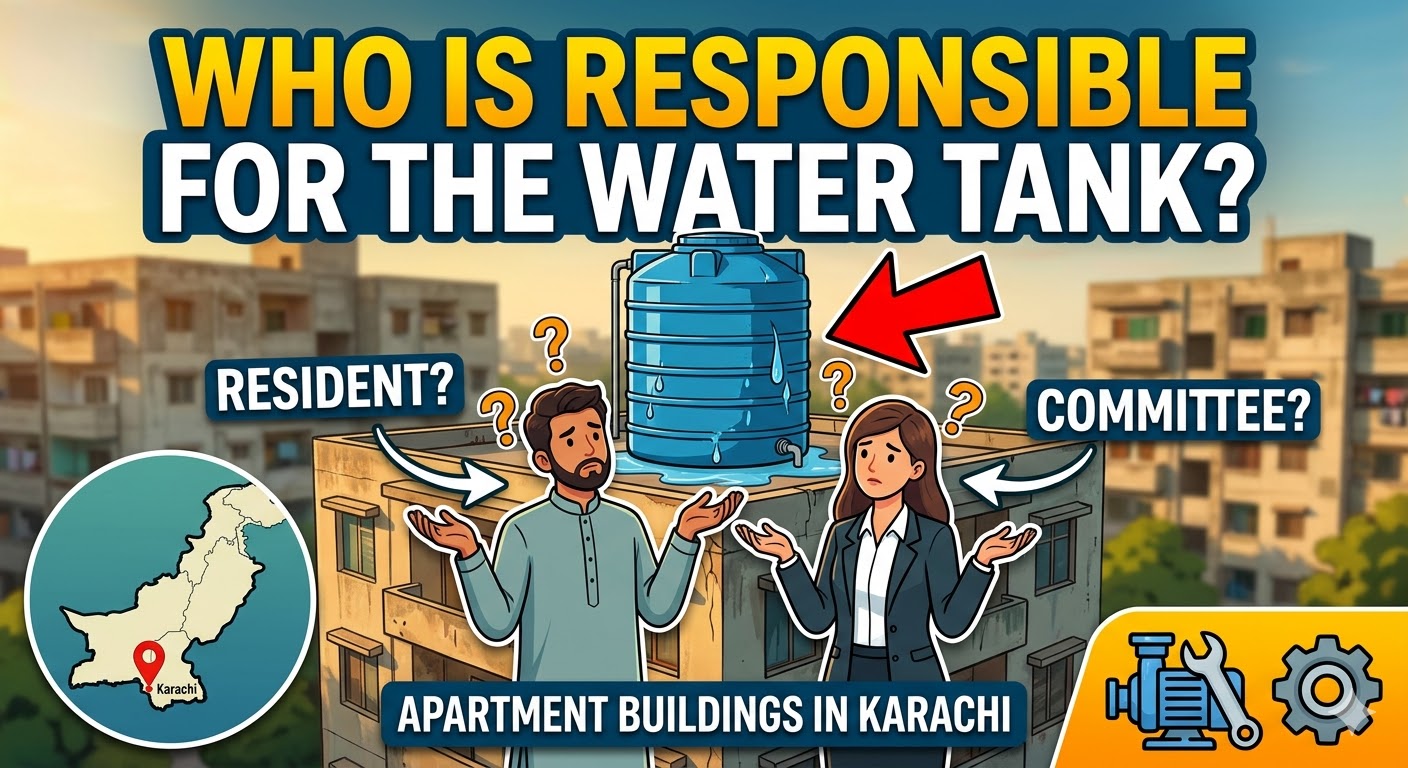
  • Property Managers in Karachi: How Regular Tank Cleaning Protects Your Investment

    Property Managers in Karachi: How Regular Tank Cleaning Protects Your Investment

    For landlords and property managers across Karachi, the real estate investment is only as valuable as the building you maintain. Here is why your water tank is one of the most financially critical — and most neglected — assets on the property.

    The Maintenance Item Every Karachi Landlord Overlooks

    If you own or manage a residential building, a multi-storey apartment complex, a commercial property, or even a single rental unit in Karachi, you are likely meticulous about certain things: painting before a new tenant moves in, fixing a broken geyser quickly, replacing a faulty water pump. These are visible problems that demand visible solutions.

    But there is one maintenance item that almost every property manager in Karachi overlooks — not out of negligence, but because it is simply invisible. The water storage tank sits on the rooftop or underground, out of sight and out of mind. It does not break down, it does not make noise, and it rarely causes an immediate, obvious problem.

    Until it does.

    By the time a neglected water tank causes a visible problem — whether that is sick tenants, a corrosion-related structural failure, a contamination complaint, or a legal dispute — the damage to your investment has already been done. The purpose of this article is to help you understand the financial, legal, and reputational case for treating water tank cleaning as a non-negotiable part of your property management routine in Karachi.

    Understanding the Karachi-Specific Risk Landscape

    Intermittent Water Supply and Prolonged Storage

    Unlike cities with 24-hour pressurised municipal supply, Karachi depends on scheduled water delivery from the Karachi Water and Sewerage Board (KWSB). Most residential and commercial neighbourhoods receive supply every 3 to 7 days. This forces building owners to store large volumes of water in overhead tanks and underground sumps.

    Water that sits stagnant for days in an enclosed, warm tank — particularly during Karachi’s brutal summer months when rooftop temperatures can exceed 50°C — undergoes rapid bacterial growth. Sediment from KWSB pipelines settles at the bottom of tanks. Algae forms on the walls. Biofilm — a thin but dangerous layer of microbial colonies — coats interior surfaces. If the tank is not cleaned regularly, every batch of freshly delivered water is immediately contaminated upon contact with this accumulated filth.

    The Tanker Problem

    In many areas of Karachi — including parts of Orangi Town, Baldia, Lyari, Surjani Town, and even some pockets of established neighbourhoods during supply disruptions — building managers rely on private water tankers to fill their storage tanks. The water quality in these tankers is almost entirely unregulated. It may come from a bore well, a canal, or a recycled source. When tanker water enters an already-dirty tank, the contamination compounds.

    For a property manager, this is a liability waiting to happen. If a tenant falls ill and can trace the source to contaminated water from your building, you are exposed to complaints, disputes, and potentially legal action.

    Coastal and Environmental Factors

    Properties in Karachi’s coastal and southern zones — DHA, Clifton, Bath Island, Baloch Colony, and Keamari — face an additional challenge: salt air. The corrosive marine atmosphere accelerates the degradation of tank materials, particularly mild steel and older GRP (Glass Reinforced Plastic) tanks. Corrosion byproducts leach into stored water, adding rust and metallic contamination on top of biological risks. Regular professional inspection and cleaning helps identify these structural issues early — before a tank wall fails and causes a far more expensive emergency.

    The Financial Case: How a Dirty Tank Costs You Money

    Tenant Complaints and Turnover

    Tenant retention is the foundation of profitable property management. In Karachi’s competitive rental market — particularly in sought-after areas like DHA, Clifton, Gulshan-e-Iqbal, and Gulistan-e-Johar — tenants have options. If the water quality in your building is consistently poor, they will eventually leave. And replacing a good tenant costs money: lost rent during vacancy, agent commissions, painting, and the time and effort involved in finding new occupants.

    The irony is that the cost of professional water tank cleaning — typically a few thousand rupees per clean — is a fraction of even one month of lost rental income. Yet most landlords never make this connection until a tenant hands in their notice citing water quality as a reason for leaving.

    Structural Damage from Neglected Tanks

    A concrete tank that develops cracks due to biological activity and chemical corrosion will eventually leak. A leaking rooftop tank causes water damage to the building below — damaging ceilings, walls, electrical wiring, and load-bearing structures. The repair costs for water-damaged construction work in Karachi can run into hundreds of thousands of rupees, far exceeding what years of professional tank cleaning would have cost.

    For underground sumps — common in larger buildings across areas like PECHS, North Nazimabad, and Federal B Area — the risk is groundwater contamination and structural undermining of foundations, which is an even more serious and expensive problem.

    Legal Exposure

    Pakistan’s tenancy laws and consumer protection frameworks are evolving. While enforcement has historically been inconsistent, the trend is toward greater tenant rights, particularly in urban centres. A well-documented complaint from a tenant about unhygienic water, especially if supported by medical evidence, creates a legitimate legal dispute. Maintaining a cleaning schedule with a professional company — and keeping records of each cleaning — is the simplest and most affordable form of protection against such disputes.

    Khan Tank Cleaning: Your Property Management Partner Across Karachi

    Khan Tank Cleaning works with individual landlords, property management companies, housing societies, and corporate building managers across Karachi. We understand that for you, this is not just about hygiene — it is about protecting an asset and maintaining a professional reputation with tenants.

    We operate two dedicated service branches for fast, local response times across the entire city:

    Properties in DHA, Clifton, Korangi, Malir, Landhi, or the broader southern and coastal belt of Karachi: Our dedicated tank cleaning service for DHA and Clifton properties offers priority scheduling for residential buildings, apartment complexes, and commercial premises in this zone. Our teams are familiar with the specific tank types, building structures, and water supply conditions in Defence and Clifton — from small bungalow tanks to the large-capacity systems in multi-storey apartment blocks along Khayaban-e-Ittehad and Clifton’s seafront high-rises.

    Properties in Gulshan-e-Iqbal, Gulistan-e-Johar, North Nazimabad, PECHS, Federal B Area, Liaquatabad, Nazimabad, or anywhere in central and eastern Karachi: Our professional tank cleaning team serving Gulshan and Jauhar handles everything from single-unit residential tanks to the large underground sumps in multi-storey buildings. These are some of Karachi’s most densely populated rental markets — areas like Block 13, 14, and 17 of Gulshan-e-Iqbal, and the residential towers of Gulistan-e-Johar — where water quality complaints from tenants are a genuine and common issue.

    Both branches are available for one-time cleans, scheduled maintenance contracts, and institutional packages. We serve all areas of Karachi, with local teams prioritised for faster response in their respective zones.

    What Professional Tank Cleaning Actually Involves — and Why DIY Is Not Enough

    Many property managers in Karachi ask a building chowkidar or general maintenance worker to ‘clean’ the tank. With respect to those workers, this is not cleaning — it is rinsing. A bucket, a brush, and some water do not remove:

    • Biofilm — which adheres to tank walls and requires high-pressure washing and chemical treatment to eliminate
    • Sludge and sediment — which accumulates at the bottom of tanks and must be vacuumed out by industrial equipment
    • Algae colonies — which grow in the upper portions of tanks exposed to indirect light and require specific fungicidal disinfectants
    • Bacterial contamination — including E. coli, Legionella, and Salmonella, which require food-safe chemical disinfection at the correct concentration and dwell time

    A professional water tank cleaning service follows a strict multi-step protocol: complete draining, high-pressure jet washing of all interior surfaces, industrial vacuuming of all loosened waste and sludge, application of food-safe disinfectants, and a final visual inspection before the tank is certified clean and ready for refilling.

    This process cannot be replicated with household tools. For a property with multiple tanks — a rooftop overhead tank plus an underground sump, which is the standard configuration in Karachi’s multi-storey buildings — professional cleaning ensures both are treated thoroughly and simultaneously.

    How Often Should a Rental Property’s Tank Be Cleaned?

    The frequency depends on the property type and usage, but here are the recommended standards for Karachi’s conditions:

    • Single-family homes and small rental units: Every 6 months — ideally before the onset of summer (March/April) and again before winter (October/November).
    • Multi-unit apartment buildings (up to 10 floors): Every 4 months, given the higher combined daily usage and the greater volume of water stored at any one time.
    • Large residential towers and commercial buildings: Every 3 months, with additional cleans after any extended supply disruption or tanker water delivery.
    • Properties near the coast (DHA, Clifton, Keamari): Every 3 to 4 months due to accelerated corrosion and higher contamination risk from salt air and sea proximity.
    • Buildings in areas with particularly poor KWSB supply (Orangi, Baldia, Surjani, parts of Lyari): Every 3 months, as more frequent tanker use increases contamination risk.

    Maintaining a simple log of cleaning dates — whether digital or in a physical building register — takes minutes and provides important documentation for any future tenant dispute or regulatory inspection.

    What to Include in Your Tenant Agreement

    Forward-thinking property managers in Karachi are beginning to include water tank maintenance clauses in their rental agreements. This approach protects both parties: the tenant is assured of a cleaning schedule, and the landlord has documented proof of their commitment to water hygiene. A simple clause might state:

    “The landlord undertakes to arrange professional water tank cleaning for the property at intervals of no less than [X] months. The tenant agrees to report any concerns about water quality to the landlord or property manager in writing within [X] days of first noticing the issue.”

    This kind of proactive documentation is increasingly important in Karachi’s growing rental market, where tenants — particularly in premium areas — are more aware of their rights and more willing to assert them.

    The Reputational Dividend: How Clean Water Builds a Better Property Brand

    In Karachi’s rental market, word of mouth remains one of the most powerful forces. Tenants talk to neighbours, to colleagues, and increasingly to online communities. A landlord or property manager who is known for maintaining a clean, well-run building commands better tenants, commands higher rents, and experiences lower vacancy rates.

    It sounds like an abstract benefit, but consider the practical reality: in a building of 20 flats in Gulshan-e-Iqbal, if the property manager sends a simple WhatsApp message to all tenants every 4 months saying ‘The water tank has been professionally cleaned today — all units will have fresh, disinfected water supply from this evening’, the effect on tenant confidence and satisfaction is significant. It costs almost nothing extra to communicate the maintenance you are already doing — but the reputational benefit is real and lasting.

    Property managers serving tenants in DHA, Clifton, and southern Karachi can build this trust by partnering with our tank cleaning specialists for DHA and Clifton buildings. Those managing properties in Gulshan, Jauhar, and central Karachi can do the same with our Gulshan and Jauhar water tank cleaning service — a simple, professional service that becomes a genuine competitive advantage in your rental portfolio.

    Protect Your Investment. Retain Your Tenants. Book Khan Tank Cleaning Today.

    Every month you delay is another month of bacterial growth, sediment accumulation, and avoidable risk to your property and your tenants.

    Khan Tank Cleaning is Karachi’s only specialist water tank cleaning company. We do not offer plumbing, painting, or pest control on the side — we clean water tanks, and we clean them better than anyone else in the city. Our trained teams use industrial-grade pressure washers, vacuum equipment, and food-safe disinfectants to deliver a genuinely clean tank — not just a rinsed one.

    We offer single cleans, scheduled maintenance contracts, and packages for property portfolios and housing societies. Our pricing is competitive, our process is thorough, and our service comes with a certificate of cleaning for your property records.

    Managing properties in DHA, Clifton, or the southern areas of Karachi? Schedule your cleaning now through our DHA and Clifton water tank cleaning service.

    Managing properties in Gulshan-e-Iqbal, Gulistan-e-Johar, North Nazimabad, PECHS, or anywhere in central Karachi? Book through our Gulshan and Jauhar professional water tank cleaning team.

    Call us now: 0340-2717530 | 0333-0293174 — available 24 hours a day, 7 days a week. We serve all areas of Karachi with fast turnaround and professional results.

    Your tenants deserve clean water. Your investment deserves professional maintenance. Khan Tank Cleaning delivers both.

    Khan Tank Cleaning | Suite-203, Mumtaz Manzil, Block-16, Gulshan-e-Iqbal, Karachi | khantankcleaning.com
  • Hotels & Restaurants in Karachi: Are You Meeting Water Safety Standards?

    Hotels & Restaurants in Karachi: Are You Meeting Water Safety Standards?

    Water safety isn’t just a home concern — it’s the backbone of every plate of food and every glass of water served across Karachi’s hospitality industry. Yet one critical factor is routinely overlooked: the cleanliness of the water storage tank.

    The Hidden Risk Inside Your Water Tank

    Karachi is a city of over 20 million people, and its water supply infrastructure is under enormous strain. Water from the Karachi Water and Sewerage Board (KWSB) travels through aging pipelines before it ever reaches your tank — picking up sediment, rust, and microbial contamination along the way. By the time water sits in a rooftop or underground storage tank for days at a time (a reality for most of Karachi, where supply is irregular), the risk of bacterial growth multiplies significantly.

    For hotels, restaurants, and guest houses, this is not merely a maintenance issue — it is a public health liability. Serving guests with water drawn from a neglected, uncleaned tank can lead to waterborne illnesses including typhoid, cholera, gastroenteritis, and hepatitis A. In Karachi’s hot and humid climate, tanks that go months without professional cleaning become ideal breeding grounds for algae, biofilm, and dangerous bacteria like E. coli and Salmonella.

    And here is the uncomfortable truth: most establishments in Karachi have not had their tanks professionally cleaned in over a year — or ever.

    What Do “Water Safety Standards” Actually Mean for Hospitality Businesses?

    Pakistan’s Pure Food Laws and the local ordinances of the Karachi Metropolitan Corporation (KMC) require food-serving establishments to maintain hygienic water sources. While enforcement may be inconsistent, the legal and reputational risk is very real. A single outbreak of a waterborne illness traced back to your kitchen or hotel can mean:

    • Closure orders from health authorities
    • Negative media coverage and social media backlash
    • Loss of customer trust that takes years to rebuild
    • Legal claims and financial penalties

    Beyond legal compliance, there is a practical standard you owe to every guest who walks through your doors. When someone orders a glass of water at your restaurant in Gulshan-e-Iqbal or checks into your hotel in DHA, they are trusting you with their health.

    Why Karachi’s Conditions Make This Even More Urgent

    Unlike cities with constant municipal water pressure, Karachi typically receives water supply on a schedule — often every 3 to 7 days in many neighbourhoods. This means:

    • Tanks are routinely filled to maximum capacity and water sits stagnant for days.
    • Sediment and sludge accumulate at the bottom of tanks, especially underground sumps.
    • The heat — with summer temperatures regularly exceeding 40°C — accelerates bacterial growth inside tanks.
    • Coastal humidity in areas like Clifton and DHA promotes algae and biofilm formation on tank walls.
    • Older buildings in areas like Saddar and Liaquatabad often have concrete tanks with cracks that harbour contamination.

    These are not hypothetical risks. These are the everyday realities of water storage in Karachi that make regular, professional tank cleaning non-negotiable for any responsible business owner.

    What a Professional Tank Cleaning Service Actually Does

    Many businesses believe that rinsing a tank or adding a chlorine tablet periodically is sufficient. It is not. A professional water tank cleaning process includes:

    1. Complete Draining

    All water is removed from the tank before cleaning begins — no shortcuts of cleaning around standing water.

    2. High-Pressure Jet Washing

    Industrial-grade pressure washers remove encrusted sludge, algae, and biofilm from all interior surfaces, including corners and seams that are impossible to reach manually.

    3. Industrial Vacuuming

    Specialised vacuum equipment extracts all loosened debris, leaving no residue behind. This step is what separates professional cleaning from informal bucket-and-brush methods.

    4. Chemical Disinfection

    Food-safe disinfectants — such as Silver Hydrogen Peroxide — are applied to kill remaining bacteria, viruses, and fungi. This step ensures the tank is not just clean, but hygienically safe for potable water.

    5. Inspection and Sign-Off

    A thorough visual inspection confirms the tank is clean, structurally sound, and ready for refilling.

    If your current cleaning service does not follow all of these steps — or if the person who cleaned your tank last time arrived with just a mop and a bucket — your water is still at risk.

    Serving Hotels & Restaurants Across Karachi — From DHA to Gulshan

    Khan Tank Cleaning operates two dedicated service branches to ensure fast, responsive, and professional water tank cleaning for businesses all across Karachi.

    If your property is located in DHA, Clifton, Bath Island, Zamzama, Korangi, or the surrounding coastal and southern areas of Karachi, our professional water tank cleaning service for DHA and Clifton is your nearest point of contact. We understand the unique water storage challenges of this area — including the corrosive effects of sea air on tank structures and the premium hygiene standards expected by the upscale hospitality sector here.

    If your hotel, restaurant, or commercial kitchen is based in Gulshan-e-Iqbal, Gulistan-e-Johar, North Nazimabad, Liaquatabad, PECHS, Federal B Area, or the central and eastern areas of Karachi, our water tank cleaning service in Gulshan and Jauhar is ready to serve you. These are some of Karachi’s most densely populated commercial zones, and the pressure on water supply infrastructure here makes regular tank maintenance even more critical.

    Both branches serve all areas of Karachi, but with local teams prioritised for their respective zones — meaning faster response times, deeper familiarity with local water conditions, and a more personalised service experience for your business.

    How Often Should a Hotel or Restaurant Clean Its Water Tank?

    For residential homes, cleaning every 6 months is the standard recommendation. For commercial food and hospitality establishments, the bar must be higher:

    • Hotels: Every 3 months minimum, or more frequently if water usage is high or supply quality is poor.
    • Restaurants and cafes: Every 3 to 4 months, with additional cleaning after any pest issue or supply disruption.
    • Guest houses and hostels: Every 4 months, given the constant turnover of guests and water usage.
    • Industrial kitchens and canteens: Every 2 to 3 months.

    These are not arbitrary numbers — they reflect the reality of how quickly contamination develops in Karachi’s climate and water conditions. For businesses serving food and beverages, there is no justification for less frequent cleaning.

    Signs Your Commercial Water Tank Needs Immediate Cleaning

    Even if you are on a cleaning schedule, watch for these warning signs that indicate your tank needs urgent attention:

    • Water has a yellowish tint, unusual smell, or metallic taste
    • Guests or staff have complained about stomach issues or digestive problems
    • You can see visible slime, discolouration, or deposits inside the tank
    • The tank has not been cleaned in more than 4 months
    • Your building recently experienced a prolonged water supply disruption (common after tanker deliveries in areas like Orangi Town or Korangi)
    • Your kitchen has recently dealt with a pest problem

    If any of these apply to your business, act now — not next week.

    Beyond Hotels: Every Commercial Property in Karachi Needs This

    The same water safety principles apply to:

    • Office buildings and corporate cafeterias
    • Schools, colleges, and universities
    • Hospitals and clinics
    • Factories and industrial facilities
    • Mosques and community centres
    • Apartment buildings and housing societies

    Whether your property is in DHA, Clifton, or the southern parts of the city, or in Gulshan, Jauhar, and the central and eastern zones, the responsibility for water safety rests with the property owner or manager — and so does the liability if something goes wrong.

    Take Action Today: Book Karachi’s Most Trusted Water Tank Cleaning Service

    Don’t wait for a health complaint or a failed inspection to take water safety seriously.

    Khan Tank Cleaning is Karachi’s most experienced and dedicated water tank cleaning company. We are the only firm in the city that specialises exclusively in this service — unlike other providers who treat tank cleaning as a side job. Our trained technicians use industrial-grade equipment, food-safe disinfectants, and a proven multi-step process to deliver results that protect your guests, your staff, and your reputation.

    If your property is in DHA, Clifton, or surrounding areas, visit our DHA & Clifton water tank cleaning page to book your service today.

    If your property is in Gulshan-e-Iqbal, Gulistan-e-Johar, or the wider central Karachi area, visit our Gulshan & Jauhar water tank cleaning page to schedule your cleaning.

    We serve all areas of Karachi — residential and commercial — with competitive rates and flexible scheduling. Call us at 0340-2717530 or 03330293174 and speak to a live representative, available 24 hours a day, 7 days a week.

    Clean tanks. Safe water. Healthy guests. That is the standard — and Khan Tank Cleaning is here to help you meet it.

    Khan Tank Cleaning | Suite-203, Mumtaz Manzil, Block-16, Gulshan-e-Iqbal, Karachi | khantankcleaning.com

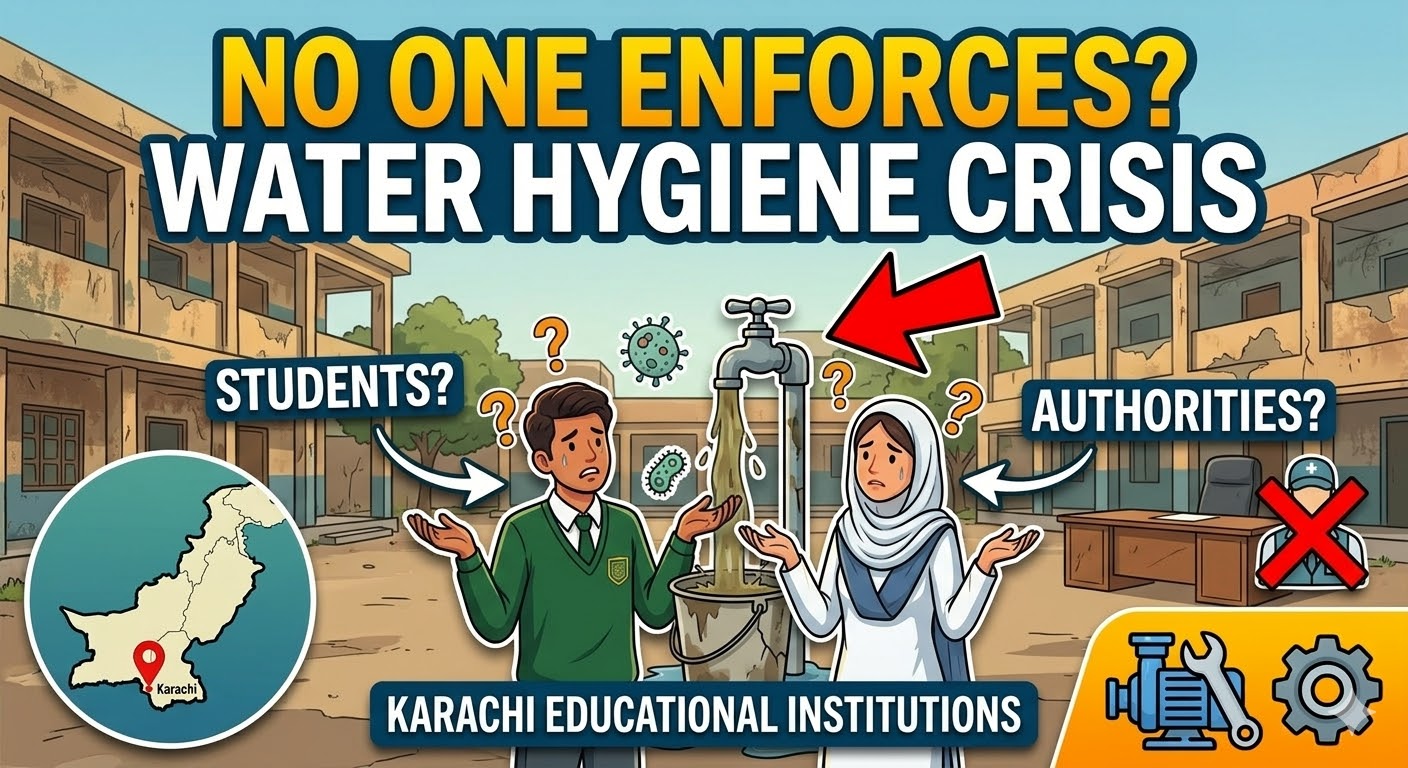
  • Schools & Universities in Karachi: The Water Hygiene Issue No One Enforces

    Schools & Universities in Karachi: The Water Hygiene Issue No One Enforces

    Thousands of students drink from tanks that have never been professionally cleaned. Here is what parents, school administrators, and property owners need to know — and do — right now.

    A Problem Hidden in Plain Sight

    Every morning, millions of children and young adults across Karachi walk into schools, colleges, and universities. They drink from water coolers, wash their hands at taps, and consume food prepared in canteen kitchens. Most parents give very little thought to where that water comes from — or what it has passed through before it reaches their child’s glass.

    That water almost certainly passed through a storage tank. And in the vast majority of educational institutions across Karachi, that tank has not been professionally cleaned in months — or years. Some have never been cleaned at all.

    This is not an exaggeration. It is one of the most overlooked public health issues in a city that already struggles with waterborne disease. And unlike contaminated street food or an obviously murky tap, a dirty water tank leaves no visible clues. The water looks clean. It tastes normal. And all the while, harmful bacteria are breeding quietly inside the tank walls, the sludge at the bottom, and the biofilm coating the interior surfaces.

    Why Karachi’s Educational Institutions Are Particularly Vulnerable

    Irregular Water Supply Means Stagnant Storage

    Karachi’s municipal water supply from the Karachi Water and Sewerage Board (KWSB) is notoriously unreliable. Many areas of the city — from North Nazimabad and Gulshan-e-Iqbal to Landhi and Orangi Town — receive water just once every few days. Educational institutions compensate by storing large volumes of water in overhead tanks and underground sumps, sometimes for 5 to 7 days at a stretch.

    Stagnant water in a warm, enclosed tank is the perfect breeding environment for bacteria such as E. coli, Legionella, and Pseudomonas. In Karachi’s extreme summer heat — when temperatures regularly exceed 40°C — this bacterial growth accelerates dramatically. The longer the water sits, the greater the risk.

    Ageing Infrastructure in Older Schools

    Many of Karachi’s oldest and most established schools — including institutions in Saddar, Lyari, Garden, and the inner city — operate in buildings that are decades old. Their water tanks are often made of concrete, which cracks over time, harbouring contamination in pores and crevices that cannot be cleaned by rinsing alone. Old galvanised pipework adds rust and heavy metal contamination to the equation.

    Even in newer schools, if tank maintenance is not built into the annual budget or assigned to a specific responsible party, it simply does not happen.

    High Volume, High Turnover, High Risk

    A school with 1,000 students consumes a large volume of water daily. Unlike a household where one family’s consistent health provides indirect feedback on water quality, an institution with hundreds of students, teachers, and support staff creates a situation where cause and effect are hard to connect. When 30 children go home with stomach pain in the same week, it may be attributed to exam stress, canteen food, or ‘something going around’ — when the common denominator was the water tank.

    What the Law Says — and Why It Rarely Matters in Practice

    Pakistan’s Pure Food Laws, Karachi Metropolitan Corporation (KMC) health regulations, and the Pakistan Environmental Protection Act all include provisions for potable water quality in public and semi-public premises. Schools and universities are legally required to provide safe drinking water to students and staff.

    In practice, however, enforcement is almost nonexistent. Health inspectors rarely visit educational institutions for routine water safety checks. When they do, their focus tends to be on canteen food hygiene and waste disposal — not on water storage infrastructure. There is no standard requirement for institutions to document tank cleaning records or submit water quality reports.

    This regulatory gap means that the burden of responsibility falls entirely on school management, university administration, and — ultimately — on parents who care enough to ask the right questions.

    If you are a parent in Karachi, the single most powerful question you can ask your child’s school is: “When was your water tank last professionally cleaned?” You may be surprised by the response.

    The Health Consequences: What Dirty Tank Water Does to Children

    Children are more vulnerable to waterborne illnesses than adults. Their immune systems are still developing, and their smaller body weight means that a lower dose of a pathogen can cause a more severe reaction. The diseases most commonly associated with contaminated water storage in urban Pakistan include:

    • Typhoid fever — a serious bacterial infection that remains alarmingly common in Karachi, with thousands of cases reported annually, including extensively drug-resistant (XDR) typhoid strains that are extremely difficult to treat.
    • Gastroenteritis — causing vomiting, diarrhoea, and dehydration, leading to missed school days and, in severe cases, hospitalisation.
    • Hepatitis A — a viral liver infection spread through contaminated water and food, with outbreaks documented across Karachi’s low and middle-income areas.
    • Cholera — though less common in institutional settings, still a real risk during supply disruptions when water quality drops further.
    • Skin and eye infections — often linked to contaminated water in bathrooms and washrooms, causing rashes, conjunctivitis, and fungal conditions.

    In a city where antibiotic resistance is rising and healthcare costs are a burden on middle-income families, preventing these illnesses through basic water hygiene is far more sensible than treating them after the fact.

    Khan Tank Cleaning: Serving Schools and Homes Across Karachi

    Whether you are a school administrator looking to bring your institution up to a proper hygiene standard, or a parent who wants to ensure the home your child returns to is equally safe, Khan Tank Cleaning provides professional, certified water tank cleaning services throughout Karachi.

    We operate two dedicated service branches to ensure fast turnaround and local expertise across the entire city:

    For institutions and homes in DHA, Clifton, Korangi, Malir, and surrounding areas: Our professional tank cleaning service covering DHA and Clifton is your nearest and fastest point of contact. Defence Housing Authority schools, the private institutions of Clifton, and the residential societies of Phase 1 through 8 are all within our primary service zone. We understand the premium hygiene standards expected in this part of the city — and we deliver them consistently.

    For schools, universities, and households in Gulshan-e-Iqbal, Gulistan-e-Johar, Federal B Area, North Nazimabad, PECHS, Liaquatabad, and central Karachi: Our water tank cleaning specialists serving Gulshan and Jauhar are equipped to handle everything from small domestic tanks to the large-capacity sumps found in multi-storey school buildings. These densely populated neighbourhoods have some of the city’s most stretched water supply infrastructure — making professional tank maintenance not a luxury, but a necessity.

    Both branches serve all areas of Karachi for larger institutional contracts, with a simple booking process and competitive rates for educational institutions, housing societies, and commercial premises.

    What Parents Can Do Right Now

    You do not have to wait for your child’s school to act. Here is a practical checklist for concerned parents in Karachi:

    1. Ask the School Administration Directly

    Write a formal letter or email to the school principal or facilities manager asking for documentation of the last water tank cleaning, the method used, and the schedule going forward. A school that takes hygiene seriously will have this information readily available.

    2. Raise It at the Parent-Teacher Association (PTA)

    If your school has a PTA, water tank hygiene is a legitimate agenda item. Collective parent pressure is far more effective than individual requests. Frame it as a student health and safety matter — which it is.

    3. Ensure Your Own Home Tank Is Clean

    Your child spends roughly 6 to 8 hours at school. They spend the rest of the day at home. If your household water tank has not been professionally cleaned in the last 6 months, the risk does not disappear when the school bell rings — it continues at home.

    Homeowners in DHA, Clifton, and southern Karachi can book a home water tank cleaning service in DHA and Clifton quickly and affordably. Families in Gulshan, Jauhar, North Nazimabad, and central Karachi can schedule their residential tank cleaning in Gulshan and Jauhar with the same professional team that serves institutional clients.

    4. Do Not Rely on Visual Inspection Alone

    If the water looks clear, that does not mean it is clean. Bacterial contamination, heavy metals, and dissolved chemical residues are invisible to the naked eye. Professional cleaning and, where necessary, water testing are the only reliable methods.

    A Note for School and University Administrators

    If you manage a school, college, madrassa, tuition centre, or university campus in Karachi, the case for regular professional tank cleaning is both ethical and practical.

    Ethically, you are in a position of trust. Parents send their children to your institution in the belief that you are looking after their wellbeing. Water safety is a fundamental part of that responsibility — and it is one that costs far less to maintain than it does to remedy after an outbreak.

    Practically, a single waterborne illness incident linked to your institution can trigger health department visits, parental uproar, and lasting reputational damage. In the age of WhatsApp parent groups and Google reviews, word travels fast. The cost of professional tank cleaning — done twice or three times per year — is negligible compared to the cost of managing a public health incident.

    Khan Tank Cleaning offers institutional service packages with flexible scheduling, certificate of cleaning for your records, and the option for follow-up water quality guidance. Our technicians are trained, our equipment is industrial-grade, and our process follows a strict multi-step protocol including complete draining, high-pressure jet washing, vacuuming of all sludge and debris, and food-safe chemical disinfection.

    How Often Should an Educational Institution Clean Its Tanks?

    • Primary and secondary schools: Every 4 months minimum — more frequently if water supply is irregular or if the tank is underground.
    • Colleges and universities with canteens or hostels: Every 3 months, given the high volume of daily water usage.
    • Tuition centres and smaller institutions: Every 6 months at minimum, aligning with the residential standard.
    • Any institution after a water supply disruption or tanker delivery: Immediate inspection and cleaning recommended, as tanker water quality in Karachi is frequently unverified.

    Book Khan Tank Cleaning Today — Protect Your Family and Your Community

    Clean water is not a privilege. It is a right — and it starts with a clean tank.

    Khan Tank Cleaning is Karachi’s only company dedicated exclusively to professional water tank cleaning. We do not treat this as a side service — it is everything we do, and we do it better than anyone else in the city. Our teams are trained, our process is thorough, and our results are guaranteed.

    Whether you are a parent who wants peace of mind about the water your family drinks at home, a school administrator who needs to bring your institution up to a proper hygiene standard, or a landlord responsible for a residential building, we are ready to help.

    Located in DHA, Clifton, Defence, Korangi, or Malir? Book your cleaning today with our DHA and Clifton professional water tank cleaning team.

    Based in Gulshan-e-Iqbal, Gulistan-e-Johar, North Nazimabad, PECHS, Federal B Area, or anywhere in central Karachi? Reach out to our Gulshan and Jauhar water tank cleaning specialists and get your tank cleaned by professionals who know your neighbourhood.

    Call us now: 0340-2717530 | 0333-0293174 — available 24 hours a day, 7 days a week.

    Don’t wait for an illness to motivate action. The water your child drinks today — at home and at school — deserves to be safe. Book Khan Tank Cleaning and make sure it is.

    Khan Tank Cleaning | Suite-203, Mumtaz Manzil, Block-16, Gulshan-e-Iqbal, Karachi | khantankcleaning.com