
- Since 2004
- 10,000+ jobs
- ISO 9001 & ISO 45001
- Transparent pricing
Water tank cleaning in Karachi
Khan Tank Cleaning was Karachi’s first dedicated tank cleaning company. Before 2004, tanks were left to plumbers, sweepers and pest control crews. Twenty-two years on, we clean underground, overhead and fiber tanks for homes, apartment buildings, offices and factories across the city.
- Sludge pumped and carried out, not flushed into your pipes
- Walls washed and scrubbed, then chlorine-disinfected
- You check the tank yourself before you pay
- SRB & FBR tax invoice for buildings and companies
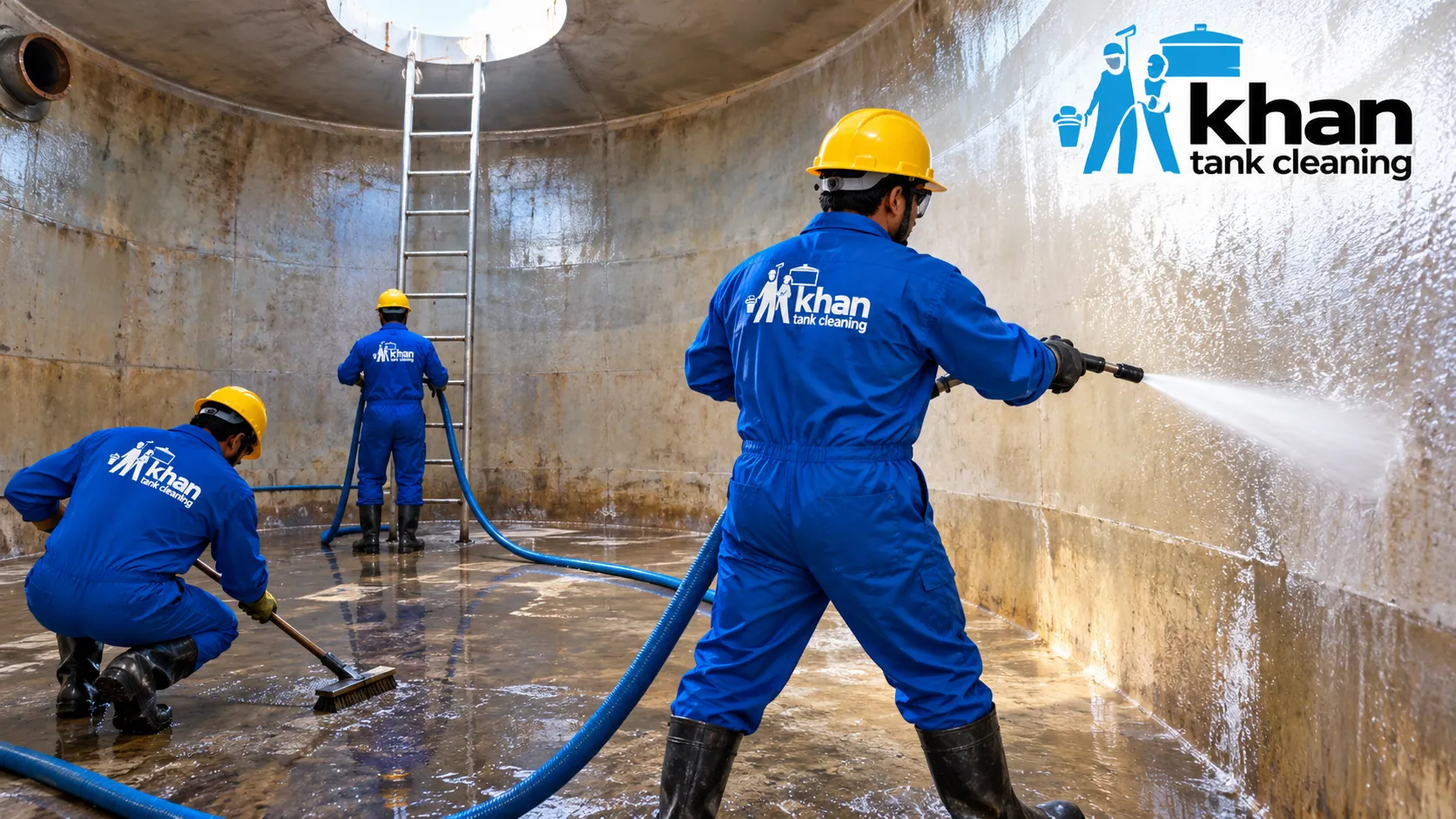
- Aug 2004Karachi’s first tank cleaning company
- 10,000+homes, buildings and factories cleaned
- 2 branchesDHA Phase 2 and Gulshan-e-Iqbal
- 24 / 7answered day and night, including holidays
Why it matters in Karachi
Why tanks here need cleaning every six months
Most tank makers suggest a yearly clean. That advice assumes a steady supply and mild weather. Karachi has neither. Water arrives on a schedule, sits in the underground tank, is pumped up to the overhead tank and sits again, often in 35 °C heat. Water that is stored twice, and stored warm, gives sediment time to settle and bacteria a surface to grow on.
That growth forms a slippery layer on the tank walls. Pouring chemical into a full tank does not remove it. It has to be scrubbed and washed off the wall first, and only then does disinfection do its job. That is why a tank that was “cleaned” with a quick rinse can smell again within days.
The other shortcut is where the dirt goes. Opening the outlet and letting loosened sludge run down the supply line empties the tank but sends the problem into your pipes, pump, geyser and filters. We pump the sludge out and take it away.
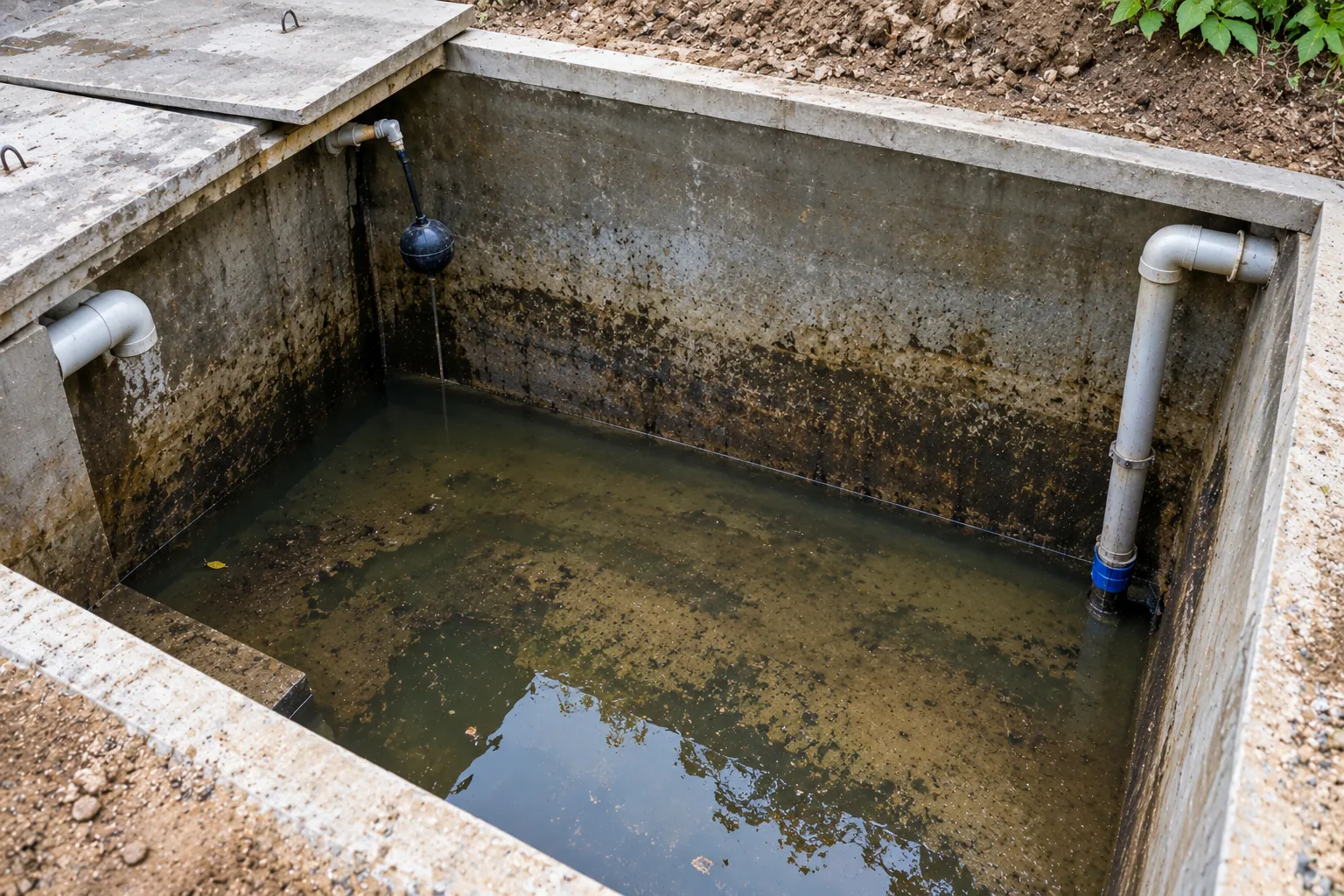
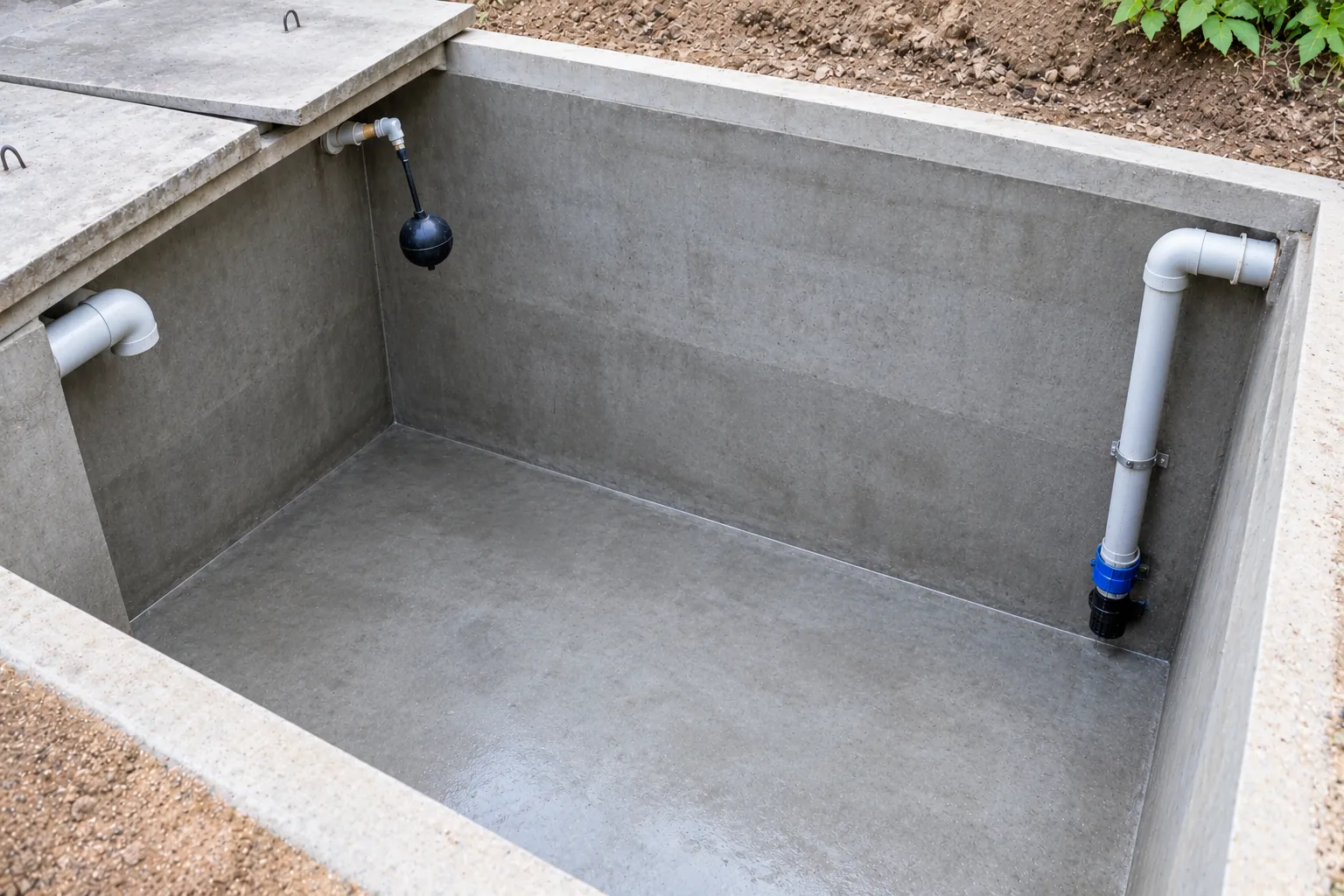
The quick job
- Rinse and a bucket of chemical
- Sludge flushed down the outlet pipe
- Slime layer left on the walls
- Climbing into a closed tank with no airflow
- Cash, no invoice, no one to call later
How we do it
- Walls washed and scrubbed before disinfecting
- Sludge pumped out and removed from the property
- Chlorine disinfection, then a fresh-water rinse
- Ventilation and a second worker at the opening
- Tax invoice, and two branches you can call 24 hours
The job, step by step
Our water tank cleaning process
Every tank goes through the same eight steps. The equipment changes with the tank: a house tank needs our routine kit, while a factory tank gets the full setup plus the client’s own safety rules.
Price or survey
Houses are priced online or on the phone. Flats, buildings, offices and factories get a free survey first.
Drain the tank
A sludge pump empties the tank. Dirty water is never pushed back into your supply line.
Ventilate before entry
Underground and closed tanks are aired out first, with a second worker at the opening. Large tanks get the full confined-space kit.
Remove the sludge
Mud, sand and sediment are taken out of the floor and corners and carried off the property.
Wash and scrub the walls
High-pressure washing and brushing take the slime layer off. Fiber and plastic tanks get low pressure and soft pads.
Chlorine disinfection
Chlorine solution goes on the walls and floor and is left to work before rinsing.
Fresh-water rinse
The tank is rinsed clean so it is ready to refill, with the lid and cover checked.
You check, then pay
You look inside the tank before payment. Buildings and companies get a tax invoice, and industrial clients can get service documentation.
Chemicals: we disinfect with chlorine (calcium or sodium hypochlorite), the same family of disinfectants used to treat city drinking water. Companies that require a product from their own approved list can have us use theirs. More on chemicals and safety
Prices
Water tank cleaning price in Karachi
Houses are priced by plot size, for the underground and overhead tank together. These are the same rates our calculator gives — nothing is added on the day.
| House size | Both tanks |
|---|---|
| Up to 100 sq yd | Rs 4,000 |
| 120 sq yd | Rs 4,500 |
| 240 sq yd | Rs 5,000 |
| 400 sq yd | Rs 7,000 |
| 500 sq yd | Rs 7,500 |
| 1,000 sq yd | Rs 10,500 |
Rates as of October 2026. Only one tank? Prices start at Rs 2,500.
What changes the price
- Tank size in gallons, or plot size for houses
- One tank or both, underground or overhead
- Flats, portions and shared building tanks are quoted on a call or a free survey
- Commercial and industrial sites are quoted after a free survey
- Payment by cash, bank transfer, JazzCash or EasyPaisa, after you have checked the tank
Homes, buildings and factories
Water tank cleaning services in Karachi
Underground tank cleaning, overhead tank cleaning and fiber tank cleaning for homes, apartment buildings, offices and factories — pani ki tanki ki safai, done properly. Different tanks need different handling: concrete takes full pressure, fiber does not, and a house tank and a factory tank do not need the same crew.
Underground tanks
The biggest tank in most homes and the one most often skipped. Ventilated before entry, sludge pumped out, walls scrubbed and disinfected.
Overhead tanks
Rooftop concrete and plastic tanks, including ones with awkward ladder access. Lid and cover checked, since most dirt gets in there.
Fiber and plastic tanks
Low-pressure washing and soft pads, so the wall is not scratched. A scratched wall collects dirt faster.
Apartment buildings
Shared tanks cleaned on a schedule that fits the building’s supply timing, with one invoice to the society or management.
Hotels, hospitals and schools
Out-of-hours scheduling where needed, a tax invoice and records of each visit for your files.
Factories and warehouses
Large and multi-tank sites, planned around your shutdown. Full safety kit, your own site rules followed, and documentation for auditors.
Clients and reviews
Trusted by homes and companies across Karachi
Alongside thousands of households, we have cleaned tanks for hotels, universities, banks, food manufacturers and welfare organisations, including:
- Avari Tower
- IBA
- SZABIST
- UBL
- Mondelez
- Shan Foods
- SGS
- TPL
- Edhi Homes
- World-Inn Hotel
Two branches, all of Karachi
Call the branch nearest you
Either branch takes jobs anywhere in the city. The nearer one reaches you faster.
DHA Phase 2 branch
South Karachi
Office-6, Plot-6-C, Phase 2, Defence Housing Authority, Karachi 75400 0333 0293174Open 24 hours, every day
Closest to DHA & Clifton, Defence View, Gizri, Seaview, Korangi, Saddar, Landhi and Malir.
Gulshan-e-Iqbal branch
East & Central Karachi
Suite-203, Mumtaz Manzil, Block 16, Gulshan-e-Iqbal, Karachi 75300 0340 2717530Open 24 hours, every day
Closest to Gulshan & Jauhar, Scheme 33, Nazimabad, North Nazimabad, Federal B Area, New Karachi, North Karachi, SITE and PECHS.
From our blog
Water tank care guides
Practical advice from twenty years of cleaning Karachi’s tanks: how often to clean, what monsoon and summer heat do to stored water, and when a filter is not enough.
Questions
Water tank cleaning in Karachi: common questions
How much does water tank cleaning cost in Karachi?
For a house, cleaning both the underground and overhead tank costs Rs 4,000 for up to 100 square yards, Rs 5,000 for 240 square yards and Rs 7,500 for 500 square yards. A single tank starts at Rs 2,500. Flats, portions, commercial buildings and factories are quoted after a free survey or a quick call. The full list and calculator are on our price page.
How often should a water tank be cleaned in Karachi?
Every six months for a household tank. Shared apartment tanks and busy commercial tanks should be cleaned every three to six months. If the water has a smell or colour, or you cannot remember the last clean, it is overdue.
How long does it take, and will my water be cut off?
An overhead tank usually takes two to four hours and a large underground tank four to eight. Water is off only while the tank is drained, cleaned and refilled, and we plan the visit around your supply timing.
Which chemical do you use, and is it safe for drinking water?
We disinfect with chlorine (calcium or sodium hypochlorite), the same family of disinfectants used to treat city drinking water. After it has had time to work, the tank is rinsed with fresh water before refilling. Companies that require a specific product from their own approved list can have us use that instead.
Can you clean an underground tank safely?
Yes. An underground tank is a closed space, so it is ventilated before anyone goes in and a second worker stays at the opening. Large commercial and industrial tanks get the full confined-space setup, and we follow any additional safety rules the client has.
Do you give a proper tax invoice?
Yes. Khan Tank Cleaning is registered with the Sindh Revenue Board and the Federal Board of Revenue, so buildings, schools, hospitals and companies receive a proper tax invoice. Industrial clients can also get service documentation for their auditors.
Which areas of Karachi do you cover?
All of Karachi. The DHA Phase 2 branch is closest for DHA, Clifton, Gizri, Seaview, Korangi, Saddar, Landhi and Malir. The Gulshan-e-Iqbal branch is closest for Gulshan, Gulistan-e-Johar, Scheme 33, Nazimabad, North Nazimabad, Federal B Area, New Karachi, North Karachi, SITE and PECHS.
Do you clean fiber and plastic tanks?
Yes. Fiber and plastic tanks scratch easily, and a scratched wall collects dirt faster, so they are washed at lower pressure with soft pads instead of the method used on concrete.
Is Khan Tank Cleaning connected to other companies with a similar name?
No. Khan Tank Cleaning has worked in Karachi since August 2004 and has two branches only: DHA Phase 2 (0333 0293174) and Gulshan-e-Iqbal (0340 2717530). We are not affiliated with any similarly named company.
Book your tank clean
Check the price online, or call the nearest branch and speak to someone now — day or night.