In Karachi, Anyone Can Show Up With a Bucket. Not Everyone Can Show You a Certificate. If you have ever searched for a water tank cleaning service in Karachi, you will know the experience: dozens of phone numbers, handwritten banners, WhatsApp forwards, and promises of the cheapest rate in town. The market is crowded — and almost completely unregulated.
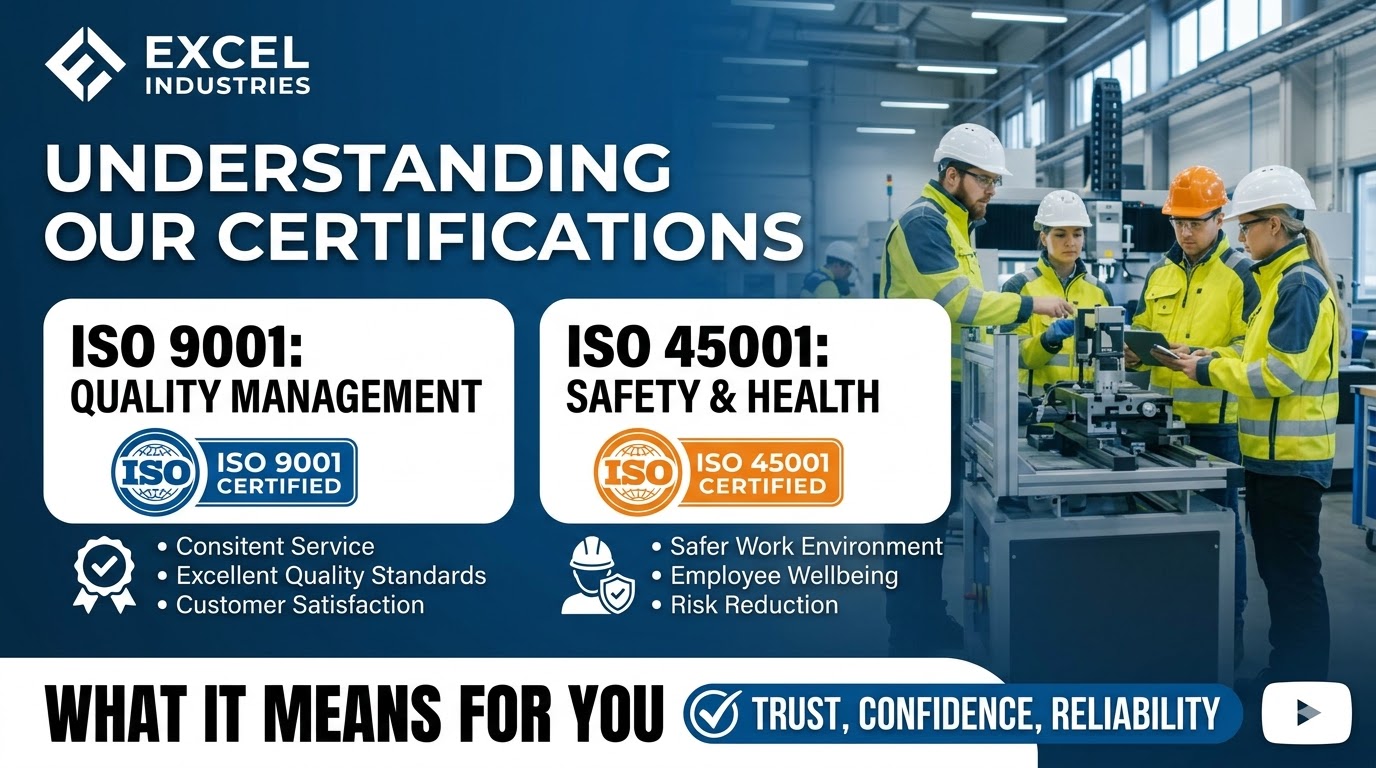
That is exactly why certifications matter. When a company holds internationally recognised certifications like ISO 9001 and ISO 45001, it is not just a logo on a brochure. It is proof — verified by independent, third-party auditors — that the company operates to a defined global standard in both quality management and occupational health and safety.
Khan Tank Cleaning is proud to be among the very few — if not the only — water tank cleaning operators in Karachi to hold both of these internationally recognised certifications. In this article, we want to explain what each certification actually means, why it was hard to earn, and most importantly: what it means for you, your family, and your property every time our team steps through your gate.
First: Why Should a Tank Cleaning Company Need Certifications at All?
Fair question. Tank cleaning might seem like a straightforward trade — come in, scrub the walls, spray some chemicals, leave. Why would a job like that require an internationally audited management system?
Because when done correctly, professional water tank cleaning is far more complex than it appears on the surface. Consider what is actually involved:
- Chemical handling: Disinfectants like Silver Hydrogen Peroxide must be stored, transported, diluted, and applied according to strict safety and efficacy protocols. The wrong concentration renders the treatment useless. The wrong chemical can permanently damage your tank or contaminate your water supply.
- Confined space operations: Underground tank cleaning in Karachi requires workers to enter oxygen-depleted, enclosed environments — classified as permit-required confined spaces under international safety standards. Without the correct equipment, oxygen monitoring, and emergency procedures, this work can be lethal.
- Water safety outcomes: The entire point of the service is to protect public health. A tank that appears clean but has not been properly disinfected is arguably more dangerous than one that was never touched — because it gives a false sense of security.
- Equipment maintenance: High-pressure jet systems, industrial vacuum pumps, and chemical delivery systems must be maintained to consistent standards. A poorly maintained pump delivers inconsistent pressure. Inconsistent pressure means incomplete cleaning.
ISO certification forces a company to have documented, audited answers to all of these challenges — not just on paper, but in daily practice. That is the difference between a certified operator and someone who bought a pressure washer.
ISO 9001:2015 — Quality Management System: What It Means in Plain Language
ISO 9001 is the world’s most widely recognised quality management standard, published by the International Organisation for Standardisation. Over one million organisations in more than 170 countries hold this certification. But what does it actually require of a company like Khan Tank Cleaning?
It Means Our Processes Are Documented — And Followed
Every step of our tank cleaning process — from the initial site assessment to the final post-disinfection checklist — is written down, standardised, and followed the same way by every technician on every job. This is not about bureaucracy. It is about consistency: the guarantee that the family in a DHA Phase 5 villa receives the exact same standard of service as the household in Gulshan Block 13.
It Means We Monitor and Measure Our Work
ISO 9001 requires organisations to track performance indicators and use data to drive improvement. For us, this means tracking things like: customer satisfaction scores, re-cleaning requests, complaint resolution times, and equipment calibration records. If a pattern of issues emerges, we are required by our quality system to investigate and correct it — not ignore it.
It Means There Is an Accountability Chain
When you book our professional tank cleaning service in Gulshan and Jauhar, or our expert water tank cleaning team in DHA and Clifton, the job is not just assigned to whoever is available. There is a documented responsibility chain: the technician, the team lead, and the quality-responsible manager all have defined roles and are accountable to our ISO 9001 management system.
It Means We Listen to Customers — Formally
ISO 9001 mandates a formal process for handling customer feedback and complaints. Every complaint must be logged, investigated, and resolved — with evidence. This is not optional, and it is reviewed by our external auditors during every certification audit. Your feedback is not lost in a WhatsApp message; it becomes part of our quality record.
In simple terms: ISO 9001 is the guarantee that you will receive a high-quality, consistent service — every time, not just when you are lucky.
ISO 45001:2018 — Occupational Health & Safety: Why It Matters More Than You Might Think
While ISO 9001 protects the quality of the service you receive, ISO 45001 protects something equally important: the safety of the people doing the work — and by extension, your safety and property while that work is happening.
ISO 45001 is the international standard for Occupational Health and Safety Management Systems. It was introduced in 2018 to provide a framework for organisations to proactively improve worker safety, reduce workplace risks, and create safe, healthy working conditions.
For a water tank cleaning company operating in Karachi, here is what ISO 45001 compliance actually looks like on the ground:
Confined Space Safety — Karachi’s Most Overlooked Risk
A significant proportion of tanks in Karachi are underground — installed beneath driveways, in basement plant rooms, or under outdoor courtyards in homes, housing societies, factories, and commercial buildings across DHA, Clifton, Gulshan, Korangi, and beyond.
Entering and working inside a large underground tank is classified as a confined space entry under ISO 45001. This means:
- A formal Permit to Work must be issued before entry
- Atmospheric testing for oxygen deficiency and toxic gases must be conducted
- Continuous atmospheric monitoring must occur during the job
- A standby person must remain outside the confined space at all times
- Emergency rescue procedures and equipment must be in place before work begins
Without ISO 45001, these steps are optional — and in the unregulated Karachi market, they are almost universally skipped. Workers enter tanks without oxygen monitors, without standby personnel, and without any rescue capability. Every year, workers in Pakistan die in confined space incidents that were entirely preventable.
Our ISO 45001 certification means these steps are mandatory. They are not suggestions. They are audited requirements.
Chemical Safety — What Goes Into Your Tank Must Be Handled Correctly
ISO 45001 requires us to maintain detailed Material Safety Data Sheets (MSDS) for every chemical we use, train our staff in chemical handling and emergency response, and have first-aid protocols ready for chemical exposure incidents. This protects our workers — and it protects you and your family during and after the service.
Equipment Maintenance and Inspection
Under ISO 45001, all equipment — pressure washers, vacuum systems, access equipment, personal protective gear — must be inspected on a regular documented schedule. A pressure washer with a faulty hose can cause serious injury. A vacuum pump that has not been serviced correctly can fail in an underground tank. Our safety system catches these issues before they become accidents.
ISO 45001 means that when our team arrives at your DHA or Clifton property — or your home in Gulshan, Jauhar, or anywhere in Central Karachi — they arrive prepared, protected, and operating under a safety system that has been independently verified to international standards.
Side by Side: ISO 9001 vs ISO 45001 — At a Glance
| ISO 9001 — Quality Management | ISO 45001 — Safety Management |
| Quality Management System | Occupational Health & Safety |
| Consistent, high-quality service delivery | Worker and client safety at every job |
| Process documentation & improvement | Hazard identification & risk control |
| Customer satisfaction & complaints handling | Incident prevention & emergency procedures |
| Audit trails for accountability | Confined space & chemical safety protocols |
| Applicable to: service quality | Applicable to: team & on-site safety |
Together, these two certifications create a complete management framework: one that ensures you receive consistent, high-quality service, and one that ensures everyone on that job site goes home safely.
What Certification Actually Involves: It Is Not Easy to Get — or Keep
One thing that is important to understand about ISO certifications: they are not self-declared. You cannot download a logo from the internet and call yourself ISO certified. The process involves:
- Gap Analysis: An assessment of your current operations against the full requirements of the standard — identifying every area that needs to be built or improved.
- System Development: Writing and implementing documented procedures, policies, forms, and records for every relevant process. For a service company like ours, this means everything from how we take a customer booking to how we handle a chemical spill.
- Internal Audits: Before external certification, your own team audits the system to verify compliance. Non-conformances must be identified and corrected.
- External Certification Audit: An accredited third-party certification body conducts a rigorous audit of your entire management system against the standard. Every gap, every missing record, every undocumented procedure is flagged.
- Surveillance Audits: Certification is not a one-time achievement. Annual surveillance audits — and full re-certification every three years — ensure that standards are maintained and continuously improved. If your system slips, your certificate is revoked.
Earning and maintaining both ISO 9001 and ISO 45001 simultaneously is a significant organisational commitment — one that most small cleaning operators in Karachi simply cannot or will not make. That investment is, ultimately, your assurance.
Why This Matters Specifically in Karachi
Karachi presents a unique combination of factors that make certified, professional tank cleaning more important here than almost anywhere else in Pakistan:
An Unregulated Market
There is no licensing body, no mandatory qualification, and no regulatory requirement for water tank cleaning operators in Karachi. Anyone with a pressure washer and a phone number can offer tank cleaning services. In this environment, certifications are the only independent verification of a company’s competence and commitment to safety.
High Density, High Stakes
Karachi’s apartment blocks, housing societies, and shared residential buildings mean that a single contaminated tank can affect dozens or hundreds of people — not just one family. In areas like Clifton, PECHS, Gulshan, or North Karachi, a poorly serviced tank in an apartment building’s rooftop plant room is a public health issue, not just a private one.
Industrial and Commercial Complexity
Large commercial buildings, factories in Korangi and SITE, hospitals, schools, and hotels all have complex, large-capacity water storage systems. For these facilities, ISO 45001 is not a nice-to-have — it is the minimum standard any responsible procurement team should require before allowing a contractor onto their site.
Our DHA and Clifton water tank cleaning service regularly serves commercial and hospitality clients who require certified contractors. And our Gulshan-Jauhar tank cleaning team handles everything from single-family homes to large housing society maintenance contracts — all under the same certified system.
A Practical Checklist: How to Verify a Tank Cleaning Company’s Credentials
The next time you are considering any tank cleaning provider — including us — here is what to ask:
- “Can you show me your ISO certification documents?”A genuine certificate will have an accreditation body logo, a certificate number, a scope of certification, and a validity date. Ask to see it.
- “Who is the issuing certification body?”Look for a recognised accreditation body. In Pakistan, these include PSQCA-accredited bodies and internationally recognised bodies such as Bureau Veritas, SGS, TÜV, or UKAS-accredited organisations.
- “Is your certificate current?”ISO certificates expire and must be renewed. A company that earned certification three years ago but has not maintained it is no longer certified — even if they still display the logo.
- “What chemicals do you use, and can you show the MSDS?”Any competent, certified operator should be able to produce the Material Safety Data Sheet for their disinfectant on request.
- “Do you have confined space entry procedures for underground tanks?”If the answer is a blank look, do not let that person into your underground tank.
We welcome these questions. We have the documents, the procedures, and the answers ready — because ISO certification requires us to.
The Real Cost of Choosing an Uncertified Operator
We understand that price is a real consideration for Karachi households. Professional, certified tank cleaning costs more than the cheapest quote from an uncertified operator. But consider the actual cost comparison:
Cheapest uncertified operator: Rs. 1,500–2,500 for a “clean” using diluted bleach and a brush. No disinfection verification. No safety procedures. No accountability. Your family continues drinking from a tank that may look clean but remains microbiologically unsafe.
A single hospitalisation for typhoid fever: Rs. 30,000–80,000 or more, depending on severity and whether private or public care. Not counting lost income, school days missed, or the emotional toll on the household.
The certified professional service costs more per visit. It costs far less than the consequences of not having it.
There is also a property consideration: incorrect chemical application — too strong, wrong type, or incompatibly mixed — can permanently damage plastic or fibreglass tanks, stain concrete surfaces, or corrode metal fittings. Certified operators use the right chemicals at the right concentrations because their quality system demands it. Uncertified operators often have no system at all.
Book a Certified, ISO-Compliant Tank Cleaning Service Today
You now know what ISO 9001 and ISO 45001 mean — and what they mean for you. The next step is simple: book a service with the company that has earned them
Whether you are in Gulshan-e-Iqbal, Gulistan-e-Johar, FB Area, Nazimabad, North Karachi, Malir, or anywhere in Central and East Karachi, our certified Gulshan-Jauhar water tank cleaning team is your closest, fastest, and most qualified option.
If you are based in DHA Phase 1 through 8, Clifton, Zamzama, Bahadurabad, PECHS, Saddar, Tariq Road, or anywhere in South Karachi, our ISO-certified DHA and Clifton tank cleaning specialists are ready to serve your home, apartment, or commercial property.
Do not settle for someone with a bucket and a bold claim. Settle for the company that can show you the certificate.
📞 Gulshan / Jauhar Branch: 0340-2717 530
📞 DHA / Clifton Branch: 0333-0293174
🌐 khantankcleaning.com | Available 24/7 | All of Karachi
ISO 9001:2015 & ISO 45001:2018 Certified
© Khan Tank Cleaning | Karachi’s ISO 9001 & ISO 45001 Certified Water Tank Cleaning Company
This article was written for educational and promotional purposes. For service bookings, visit khantankcleaning.com

Mateen Khan is the Founder & Owner of Khan Tank Cleaning, Karachi’s first dedicated professional water tank cleaning company (est. 2005). With 20+ years of industry experience, he leads an ISO 9001 & ISO 45001 certified team that follows a strict 8-step process using industrial equipment and food-grade disinfectants. Mateen is committed to making clean, safe water accessible to every household and business in Karachi.
Leave a Reply