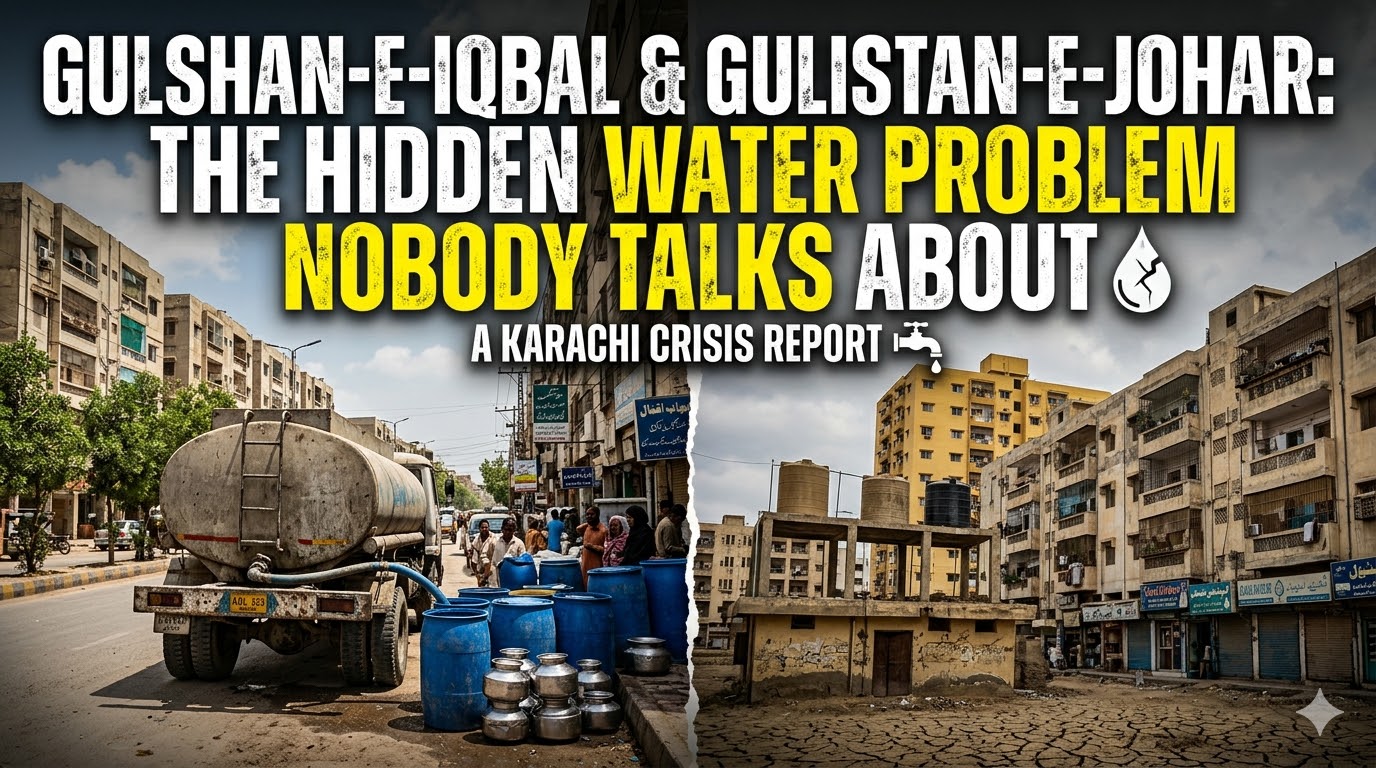
In a city of over 15 million people where water arrives once or twice a week and is stored in rooftop or underground tanks for days at a time, the quality of that stored water is quite literally a matter of life and death. Karachi’s water supply challenges are well-documented: aging pipelines, intermittent supply schedules, and high microbial loads in source water all conspire to make tank contamination not an occasional risk, but a near-certainty without proper, professional cleaning.
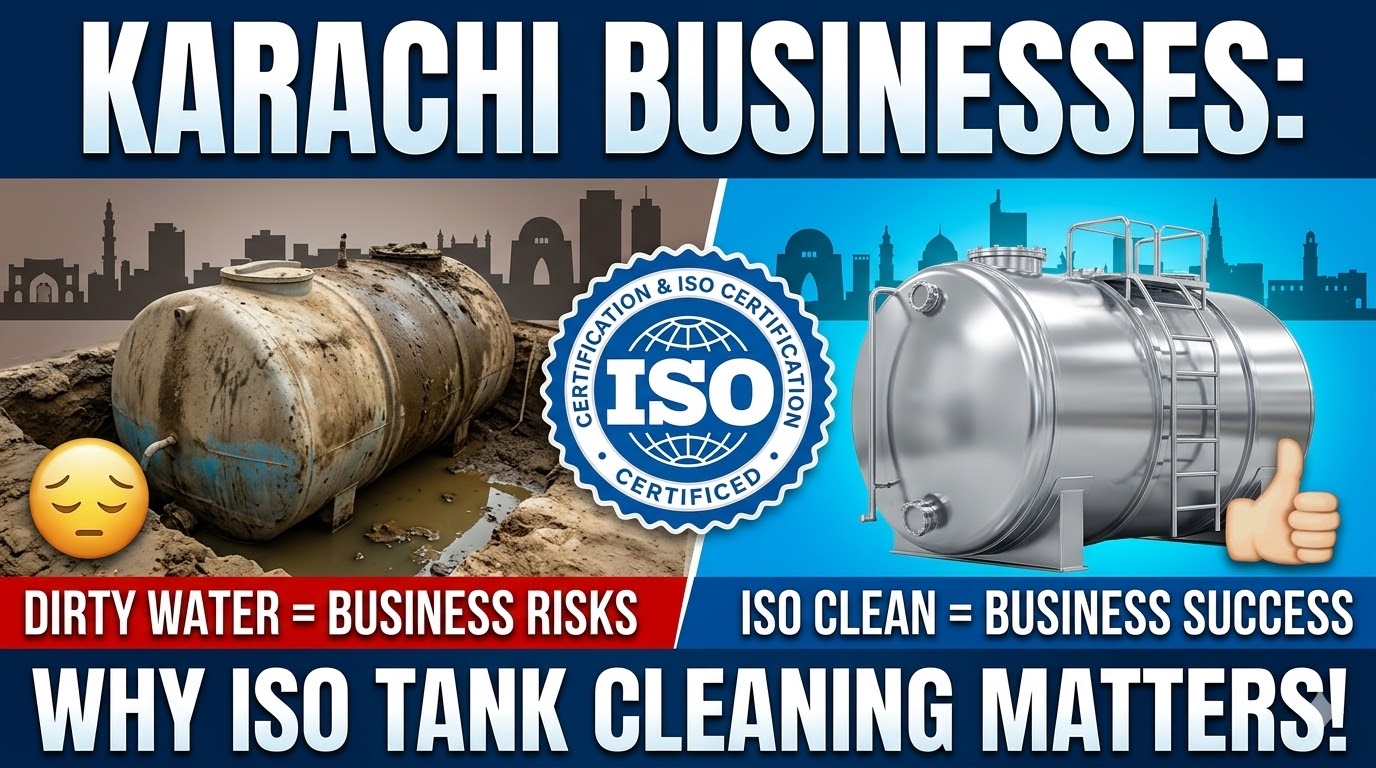
Yet, despite this reality, most households in Karachi still rely on either DIY cleaning or informal services that operate with no documented process, no verifiable chemical safety, and no accountability. This is where ISO certification becomes not just a quality badge — but a critical safeguard for your family’s health and your business’s reputation.
In this article, we break down exactly what ISO certification means for water tank cleaning, why it matters specifically in Karachi’s unique conditions, and how Khan Tank Cleaning — through both our Gulshan-Jauhar branch and our DHA-Clifton branch — delivers certified, professional results that protect every drop of water your home or business relies on.
1. What Does “ISO-Certified” Actually Mean for Tank Cleaning?
ISO, the International Organization for Standardization, sets globally recognized benchmarks for quality management, safety procedures, and environmental responsibility. For a water tank cleaning company, ISO certification means the service provider has been independently audited and verified to follow consistent, documented processes every single time they perform a job.
In practical terms, ISO certification for tank cleaning covers:
- Documented, repeatable cleaning procedures — not guesswork
- Use of approved chemicals tested safe for potable (drinking) water systems
- Trained technicians who follow confined-space entry safety protocols
- Proper equipment maintenance and calibration standards
- Environmental compliance for wastewater and sludge disposal
- Client documentation, including before/after reports and chemical usage records
The difference between an ISO-compliant service and an informal one is not just paperwork. It is the difference between a technician who checks oxygen levels before entering an underground tank and one who simply climbs in — risking asphyxiation and leaving your tank inadequately cleaned.
| Key Takeaway ISO certification transforms water tank cleaning from a casual chore into a scientifically verified health intervention — documented, safe, and accountable. |
2. Karachi’s Unique Water Challenges — Why the Bar Is Higher Here
Every major city faces water storage challenges. But Karachi’s situation is among the most demanding in the region, and understanding this context explains why standard cleaning simply is not good enough.
Intermittent Supply Creates Extended Storage Periods
In most Karachi neighbourhoods — from Gulshan-e-Iqbal and Gulistan-e-Jauhar to PECHS and Bahadurabad — water from KWSB (Karachi Water & Sewerage Board) arrives on irregular schedules, often once or twice per week. Families and businesses must store enough water in overhead and underground tanks to last through the dry periods. The longer water sits in a tank, the greater the opportunity for bacterial biofilm to form, algae to grow, and sediment to settle.
Poor Source Water Quality
Independent water tests in Karachi have consistently shown elevated coliform bacteria counts and heavy metal traces in municipal supply. When this water enters your tank and sits for days, any pre-existing contamination multiplies. Without certified, chemical-grade disinfection, your tank simply becomes an incubation chamber.
Karachi’s Climate Accelerates Microbial Growth
With average temperatures exceeding 35°C in summer, Karachi’s warm climate creates ideal conditions for bacterial growth inside tanks — particularly overhead tanks on rooftops that absorb direct heat. Bacteria such as E. coli, Salmonella, and Legionella thrive in warm, stagnant water. Waterborne diseases including diarrhoea, typhoid, and hepatitis A remain among the leading causes of hospital admissions in the city’s paediatric wards every year.
Construction Dust, Smog, and Airborne Contamination
Karachi’s year-round construction activity, sea breeze carrying salt particulates, and chronic air quality issues mean that open or loosely sealed tanks are perpetually exposed to airborne contamination. In dense areas like Korangi Industrial Zone, SITE Area, and even residential pockets near major roads, this risk is compounded further.
| The Bottom Line In a city with Karachi’s water infrastructure and climate conditions, tank cleaning is not a luxury service — it is a health emergency prevention tool. And only certified, process-driven cleaning can be trusted to do the job right. |
3. What Happens When You Skip Certified Tank Cleaning?
Let’s be blunt: cutting corners on tank cleaning in Karachi has real, measurable consequences.
For Homeowners
- Persistent gastrointestinal illnesses — particularly in children under 12 — often trace back directly to contaminated tank water.
- Foul-smelling or discoloured water, scaling in plumbing fixtures, and reduced effectiveness of water purifiers are all downstream effects of an uncleaned tank.
- Biofilm (a slimy bacterial layer) that forms on tank walls is invisible to the naked eye but can cause serious long-term health issues. It cannot be removed by manual scrubbing alone.
For Businesses — The Stakes Are Even Higher
For Karachi’s restaurants, hotels, schools, hospitals, factories, and commercial offices, contaminated water is not just a health risk — it is a legal and reputational liability.
- Food businesses can face PSQCA (Pakistan Standards and Quality Control Authority) violations if served water fails health standards.
- Schools and educational institutions have an ethical duty of care to students; a waterborne illness outbreak can trigger immediate inspection and closure.
- Hospitals and clinics — where vulnerable patients already have compromised immune systems — face catastrophic risk from Legionella and other waterborne pathogens.
- Corporate offices, restaurants, and hotels risk severe reputational damage if water quality complaints surface publicly.
An ISO-certified cleaning service provides documented proof that your water storage meets professional health standards — protection for your family and legal cover for your business.
4. What Sets ISO-Certified Tank Cleaning Apart: The Process Difference
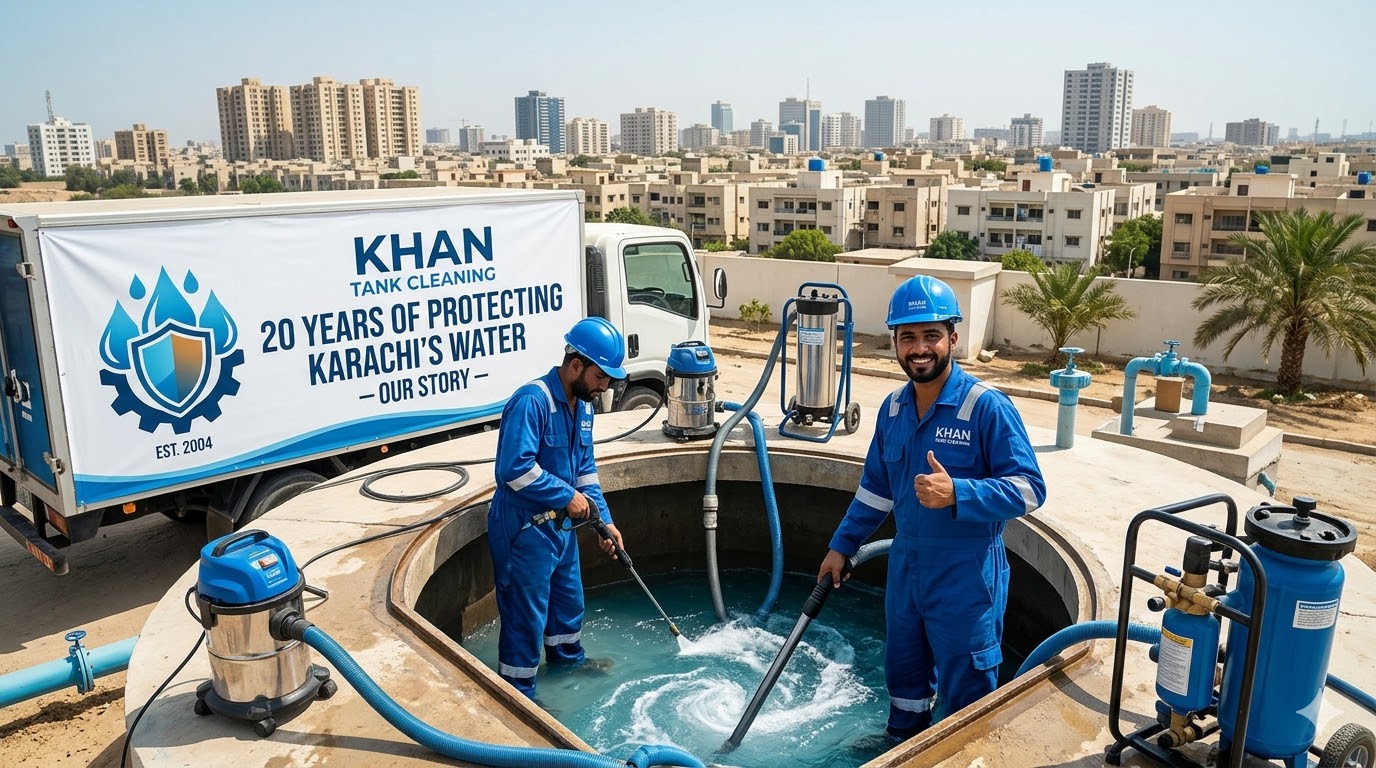
When Khan Tank Cleaning arrives at your property, our technicians follow a structured, documented process that informal services simply do not and cannot replicate. Here is what certified, professional tank cleaning looks like:
Step 1 — Pre-Inspection & Safety Setup
Every job begins with a full assessment of tank type (overhead, underground, concrete, fibre, plastic, stainless steel), size, accessibility, and contamination level. For underground tanks, we deploy oxygen meters, forced ventilation systems, and full confined-space entry safety gear before anyone descends.
Step 2 — Controlled Drainage
All water is drained using industrial-grade submersible pumps, directed to appropriate drainage systems to prevent property flooding and environmental contamination.
Step 3 — Sludge & Debris Removal
Accumulated sediment, dead insects, rust flakes, and organic matter are physically removed before mechanical cleaning begins. This step is critical and is routinely skipped by informal operators.
Step 4 — High-Pressure Jet Washing (2,000–3,000 PSI)
Industrial jet washers blast away algae, biofilm, mineral scale, and stubborn deposits from all surfaces — walls, floor, ceiling, and every corner. Many small Karachi services only use buckets and brushes, which leave biofilm intact. High-pressure washing removes 99.9% more contaminants.
Step 5 — Industrial Vacuuming
Specialized vacuum systems extract all loosened sludge and residual water from the tank, leaving surfaces dry and ready for disinfection. This step ensures no sludge residue remains to re-contaminate your water.
Step 6 — Certified Chemical Disinfection
This is where certification truly matters. We use Silver Stabilized Hydrogen Peroxide as our primary disinfectant — a food-grade, WHO/EPA-approved compound that is highly effective against bacteria, viruses, and biofilm, while being completely safe for human consumption. We never use harsh industrial acids that can damage tank materials and leave toxic residues.
Step 7 — Final Inspection & Documentation
Before we refill your tank, we conduct a thorough final inspection. Every job is documented with before/after records, chemical usage logs, and a service report that you retain — your verifiable proof of certified cleaning.
| No Shortcuts. No Guesswork. Just Results. This is the process Khan Tank Cleaning follows on every single job — whether it is a 200-litre residential overhead tank in Gulistan-e-Jauhar or a 50,000-litre industrial storage system in DHA. Certification means the same standard, every time. |
5. Khan Tank Cleaning’s Two Branches — Certified Service Across All of Karachi
Khan Tank Cleaning operates two dedicated service branches, allowing us to cover all corners of Karachi with local depth and faster response times. Both branches follow the same ISO-aligned procedures, use the same certified chemicals, and are staffed by the same professionally trained technicians.
Branch 1 — Serving Gulshan, Gulistan-e-Jauhar & Karachi East
Our water tank cleaning service for Gulshan and Jauhar is specifically positioned to serve the high-density residential and commercial zones of East Karachi. This branch prioritizes areas including:
- Gulistan-e-Jauhar (Blocks 1–19, all sectors)
- Gulshan-e-Iqbal (all blocks) & Gulshan-e-Maymar
- North Nazimabad, Buffer Zone & F.B. Area
- Korangi, Landhi & Shah Faisal Town
- Malir, Model Colony & Gulzar-e-Hijri
- And all surrounding areas across Central and East Karachi
Gulistan-e-Jauhar and Gulshan-e-Iqbal are among Karachi’s most densely populated residential corridors — areas where apartment blocks, multi-family housing, and commercial plazas all share intermittent water supply and heavily used storage tanks. The need for certified tank cleaning in these neighbourhoods is especially acute. Our Gulshan-Jauhar team offers professional tank cleaning near Jauhar and Gulshan with short response times and deep local knowledge.
Branch 2 — Serving DHA, Clifton & Karachi South-West
Our professional water tank cleaning service for DHA and Clifton caters to Karachi’s premium residential and commercial districts where property values are high, corporate offices are concentrated, and water quality expectations are rightly elevated. This branch serves:
- DHA (Defence Housing Authority) — all phases
- Clifton (all blocks) & Bath Island
- PECHS (all blocks) & Tariq Road
- Saddar, Cantt & Garden East
- Zamzama, Bahadurabad & Shadman Town
- Keamari, Kemari Port & Karachi Cantt areas
- Bahria Town Karachi and surrounding new development zones
For businesses and homeowners in DHA and Clifton, ISO-certified cleaning is particularly relevant: the commercial real estate density, the presence of high-end restaurants, private schools, and corporate offices, and the reputational stakes involved all demand documentation and accountability that only a certified service can provide. Our DHA and Clifton tank cleaning team is equipped and experienced for both residential and large-capacity commercial jobs.
| Full Karachi Coverage No matter which side of the city you are on — whether it is the congested residential lanes of Jauhar and Gulshan or the premium districts of DHA and Clifton — Khan Tank Cleaning brings the same certified, professional standard to your doorstep. |
6. How Often Should Karachi Homes and Businesses Clean Their Tanks?
Given Karachi’s water quality and storage conditions, the internationally recommended minimum of once every six months is a starting baseline — not a ceiling. Here is a more practical guide for Karachi residents:
| Property Type | Recommended Frequency | Special Considerations |
| Residential (apartment/house) | Every 6 months | Increase frequency if waterborne illness detected |
| Large housing society/flat complex | Every 3–4 months | Multiple tanks, higher contamination risk |
| Restaurant / food business | Every 3 months | Regulatory compliance; staff & customer health |
| School / college | Every 3 months | Student health duty of care |
| Hospital / clinic | Every 1–2 months | Vulnerable patients; Legionella risk is critical |
| Hotel / serviced apartments | Every 3 months | Guest-facing water quality standard |
| Factory / industrial facility | Every 6 months | Depends on water usage volume; document all cleanings |
In addition to scheduled cleaning, immediate professional cleaning is recommended if you notice any discolouration, odour, or taste changes in your water, or if a household member or employee experiences unexplained gastrointestinal illness.
7. The Hidden Cost of Cheap, Uncertified Cleaning
It is tempting to book the cheapest option you find on OLX or through a WhatsApp forward. But when it comes to your water supply, the cheapest service almost always costs more in the long run. Consider the real costs of substandard tank cleaning:
- Medical bills — Treating a case of typhoid or hepatitis A in a Karachi private hospital can easily run PKR 50,000–200,000 or more, far exceeding the cost of even the most thorough professional cleaning.
- Recurrent illness — Biofilm left behind by bucket-and-brush cleaners means contamination returns within weeks. You end up cleaning more often, spending more, and staying sick.
- Plumbing damage — Scale, sediment, and chemical residue from improper cleaning corrodes pipes, clogs filters, and shortens the life of water purifiers and geysers.
- Business disruption — A contamination incident at your restaurant, school, or office can mean days of operational shutdown, regulatory scrutiny, and long-term reputational loss.
- No accountability — Informal cleaners carry no insurance, provide no documentation, and disappear if something goes wrong. Certified services are accountable.
Whether you are in Gulistan-e-Jauhar needing reliable residential tank cleaning in Jauhar and Gulshan, or a business owner in DHA requiring documented commercial tank cleaning in DHA and Clifton — the value of ISO-aligned certified cleaning is not just health protection. It is financial protection.
8. What to Look For When Choosing a Tank Cleaning Service in Karachi
Not all services that claim to be “certified” or “professional” actually are. Here is a quick checklist to separate genuine certified services from marketing claims:
- ✔ Can they show you their cleaning procedure in writing? A certified company has documented steps — not just verbal assurances.
- ✔ Do they use certified, food-grade disinfectants? Ask for the product name and its safety classification. Avoid any service that uses industrial acids or unknown chemicals.
- ✔ Do they have proper safety equipment for underground tanks? Confined space entry without oxygen monitoring is not just unprofessional — it is potentially fatal for the technician and a liability for you.
- ✔ Will they provide a service report? Documentation is the mark of a professional, accountable service.
- ✔ Are they available 24/7 for emergencies? Water problems don’t keep office hours. A service that is only reachable 9-to-5 is not equipped for Karachi’s needs.
- ✔ Do they have experience with your tank type? Underground RCC tanks, overhead plastic tanks, fibre tanks, and stainless steel tanks each require different approaches. Generalist cleaning is not the same as specialist cleaning.
Khan Tank Cleaning checks every box on this list. We are the only dedicated, specialist water tank cleaning company in Karachi — meaning tank cleaning is not a side job we do between other contracts. It is our entire business, and we have built our processes, equipment, and team around doing it right.
Conclusion: Your Water Is Only as Clean as Your Tank
Karachi’s water challenges are real, persistent, and — for most homeowners and businesses — largely invisible. You cannot see the biofilm growing on your tank walls. You cannot taste the early stages of bacterial contamination. By the time the problem becomes obvious, it has already affected your family’s health or your business’s operations.
ISO-certified tank cleaning is the only reliable answer to these invisible risks. It provides the process consistency, chemical safety, technical expertise, and documented accountability that Karachi’s conditions demand. It is not an upgrade. In this city, it is the baseline standard every family and every business should insist on.
Whether you are in the busy residential streets of Gulshan and Jauhar — where our Gulshan-Jauhar branch provides fast, certified service — or in the premium districts of DHA and Clifton, where our DHA-Clifton branch delivers professional, documented cleaning for homes and businesses alike — Khan Tank Cleaning stands ready to protect your water supply.
🚨 Is Your Tank Due for a Professional Clean?
| Book Your ISO-Certified Tank Cleaning Today Don’t wait for illness to tell you it’s time. Whether it’s been 6 months or 6 years, our certified team is ready to restore your tank to a safe, clean standard — fast. 📍 Gulshan-e-Jauhar / Gulshan / East Karachi: khantankcleaning.com/water-tank-cleaning-gulshan-jauhar-karachi 📍 DHA / Clifton / South & West Karachi: khantankcleaning.com/water-tank-cleaning-dha-clifton-karachi 📞 Branch 1 (Gulshan/Jauhar): 0340-2717530 📞 Branch 2 (DHA/Clifton): 03330293174 ✔ Available 24/7 ✔ All Tank Types ✔ Residential & Commercial ✔ Certified Chemicals ✔ Full Documentation ✔ Satisfaction Guaranteed |
Serving all areas of Karachi with dedicated branches in Gulshan-Jauhar and DHA-Clifton.
Visit us at khantankcleaning.com