Category: Why Professional Cleaning Matters

Proper cleaning is essential for maintaining a safe, hygienic, and pest-free environment. In this section, we discuss why professional cleaning and pest control services are often more effective than DIY methods. These articles explain how trained technicians, proper equipment, and industry-grade treatments help eliminate hidden contamination, stubborn pests, and health risks that ordinary cleaning may miss. For homes and businesses in Karachi, professional services play a crucial role in ensuring long-lasting cleanliness, safety, and peace of mind.

  • Why ISO-Certified Tank Cleaning Matters, Especially for Karachi Businesses and Homeowners

    Why ISO-Certified Tank Cleaning Matters, Especially for Karachi Businesses and Homeowners

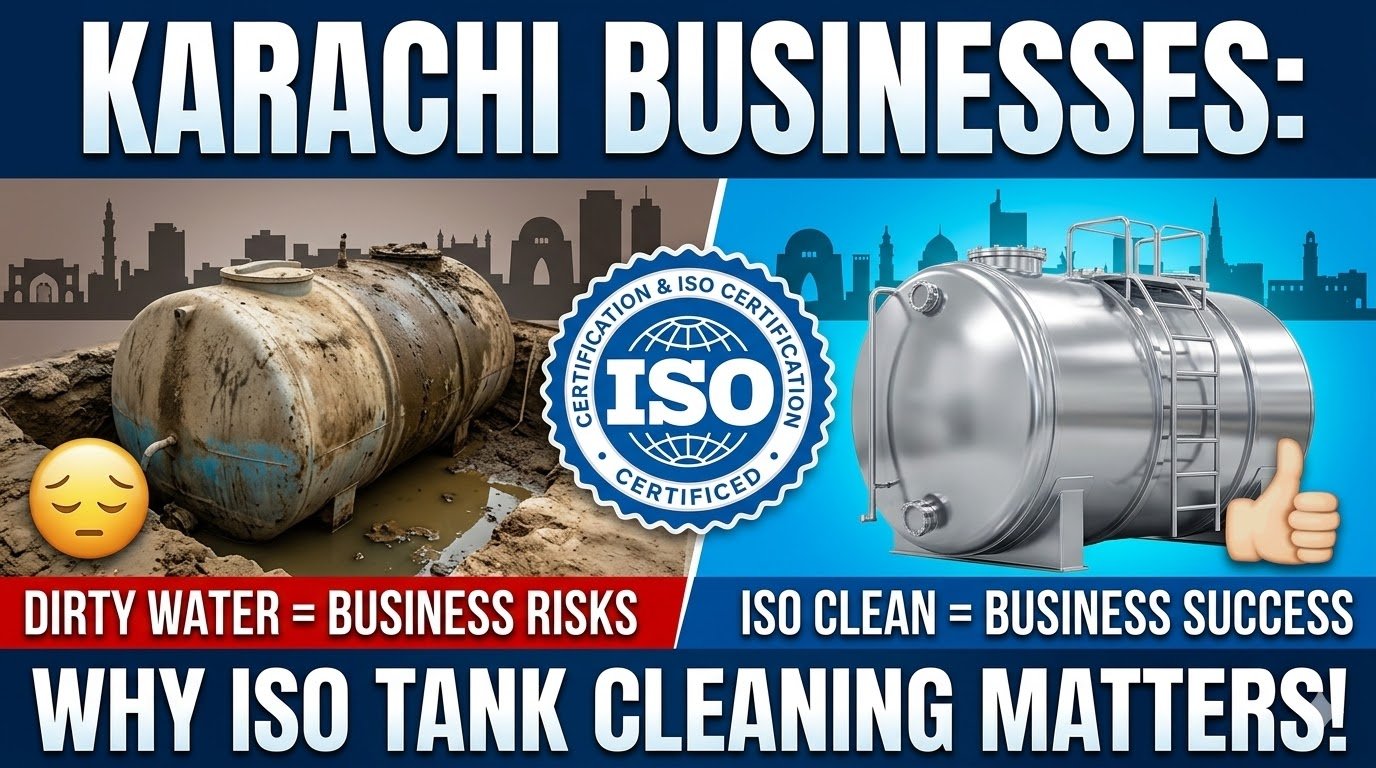
    A certificate on an office wall does not clean a tank. What it should do is change how the job is carried out: the same steps in the same order, safety precautions that are not optional, and a record at the end. This article looks at ISO-certified tank cleaning in Karachi from the customer’s side: what is different on the day, why businesses ask for it, what a homeowner gains, and what it cannot promise.

    For an explanation of the two standards themselves, see ISO 9001 and ISO 45001 explained.

    In brief

    • A company is certified to a named standard: ISO 9001 for quality, ISO 45001 for health and safety.
    • On the day, certification should mean a written price, safe entry, proper equipment, measured disinfection and a report.
    • Businesses ask for it because auditors, regulators and their own systems require controlled suppliers.
    • Homeowners gain safety on their property, consistency and proof.
    • It does not guarantee sterile water, and the certificate itself should be checked.

    What “ISO-certified” should mean

    Strictly, a company is certified to a named standard. For tank cleaning the relevant ones are ISO 9001, for quality management, and ISO 45001, for occupational health and safety. Certification means an independent certification body has audited the company’s management system against the standard and continues to audit it every year. It is voluntary. There is no licensing regime for tank cleaners in Karachi, which is exactly why some customers ask for it.

    What is different on the day

    StageUncertified, informal cleaningCleaning under a certified system
    Before workVerbal price, often revisedWritten quote that is the final price
    Entering an underground tankStraight in, usually aloneVentilation, gas check, harness, attendant at the hatch
    Removing sludgeStirred and bailedVacuum extraction off the property
    Cleaning surfacesBrush within arm’s reachJet washing of walls, floor and ceiling at 3,000+ PSI
    DisinfectionBleach or acid by eye, or nothingNamed product, dose matched to tank volume, contact time, rinse
    FinishingRefill and leaveInspection of walls, joints and lids; defects photographed
    PaperworkNoneDated report, photographs, next-service date, tax invoice

    The right-hand column is our eight-step procedure. The certificate is the assurance that it is followed on every job and not only when the owner is watching. A step-by-step account is in what happens during a professional tank cleaning.

    Why Karachi raises the stakes

    • Poor incoming water. When the Pakistan Council of Research in Water Resources tested Karachi’s water for a Supreme Court commission, 107 of 118 samples were unsafe. Tanks start each fill with contamination already in them.
    • Long storage. Supply comes in turns, so water sits for days.
    • Heat. Stored water is warm most of the year, which favours bacterial growth. See heat and bacteria in water tanks.
    • Shared tanks. One tank often serves a whole building or workforce.
    • Dangerous tanks. Underground tanks have killed workers and householders in the city, including five people in one incident in 2025.

    In those conditions the gap between a rinse and a proper cleaning is wide, and so is the gap between safe and unsafe entry.

    Why businesses ask for certified contractors

    For an organisation, the tank cleaning contractor is a supplier like any other, and suppliers have to be justified to someone.

    • Supplier approval. Companies that run their own ISO, food safety or pharmaceutical quality systems are expected to control their service providers. A contractor with a certified system and proper records is far easier to approve.
    • Audit evidence. An auditor or inspector wants a dated record of each cleaning from an identifiable contractor. The service report and tax invoice provide it.
    • Legal duties. Factories must provide wholesome drinking water under section 22 of the Sindh Factories Act, 2015, and the same Act restricts entry into tanks where dangerous fumes are likely (section 48). A contractor working inside your premises under a safety management system helps you meet both.
    • Regulators. Food businesses are inspected by the Sindh Food Authority, which reported 47,875 inspections and improvement notices, and 370 outlets sealed, across the province between July 2025 and January 2026. Healthcare establishments answer to the Sindh Healthcare Commission.
    • Liability. If someone is hurt in your tank, you will be asked who you hired and what precautions they took.
    • Tax. Payments to unregistered providers cause problems in the accounts, as explained in why SRB and FBR registration matters.

    We have written sector guides for factories and warehouses, hospitals, hotels and restaurants and schools and universities.

    What homeowners gain

    A household has no auditor to satisfy, so is certification relevant? We think so, for three practical reasons.

    1. Safety on your property. You do not want an accident in your underground tank. A company certified for occupational health and safety has a system for entering it.
    2. Consistency. The crew that arrives follows the same procedure as the one your neighbour had, whoever is on shift.
    3. Proof. You receive photographs of the inside of your tank before and after, and a date to plan the next cleaning from.

    It is not the only way to get a good job, and it costs more than a man with a bucket. The comparison is set out in tank wallah versus professional cleaning.

    How often, by type of property

    PropertyRecommended intervalNote
    HouseEvery 4 to 6 monthsEvery 3 months if tanker-fed or with an infant at home
    Apartment building or housing societyEvery 3 monthsShared tanks; keep the report with the union’s records
    Restaurant, cafe, caterer, food factoryEvery 3 monthsHave the report ready for inspections
    School, college, universityEvery 3 monthsBefore each term is a practical rhythm
    Hotel or serviced apartmentsEvery 3 monthsLow-occupancy periods mean stagnant water; clean before reopening wings
    Hospital or clinicAt least every 3 months, or as your infection control plan requiresVulnerable patients; follow your own committee’s schedule if stricter
    Factory or warehouseEvery 3 to 6 months for drinking water tanks; process tanks per audit scheduleDocument every cleaning

    The reasoning behind these intervals is in how often to clean a water tank in Karachi. The official minimum for any tank, from the Sindh health department, is once a year before summer.

    What certification cannot promise

    • Sterile water. No certificate covers what the supply delivers after the cleaning.
    • A permanent result. The tank will need cleaning again on schedule.
    • That a certificate is genuine. You have to check. Certificates expire and forged ones exist.
    • That a certified company is right for your job. Ask about your tank type and access all the same.

    How to check a contractor’s claim

    1. Ask which standards they are certified to. “ISO certified” without a number is not an answer.
    2. Ask for a copy of the current certificate and read the name, scope and expiry date.
    3. Look up the certificate or the certification body. The IAF CertSearch database covers accredited certification worldwide.
    4. Ask to see the written procedure and a sample report.
    5. Ask how they enter an underground tank. The answer should come without hesitation.

    The full list of questions is in what to ask before hiring a tank cleaning company.

    ISO-certified tank cleaning in Karachi from our two branches

    Khan Tank Cleaning is certified to ISO 9001 and ISO 45001, registered with the SRB and FBR, and has cleaned tanks in Karachi since 2005, a history told in our story. Ask either branch to show you the current certificates. Organisations we work for are listed on our clients page.

    For the south of the city, contact the DHA and Clifton branch; for the east, centre and north, the Gulshan and Jauhar branch. Homes can get a fixed price online, and commercial and industrial sites are surveyed free of charge.

    Frequently asked questions

    Is ISO-certified tank cleaning more expensive?

    Usually more than informal cleaning, because of equipment, trained staff and safety measures. The price is fixed in writing before the work.

    Do I need a certified company for a small rooftop tank?

    A small plastic tank can be cleaned safely from outside by a careful person. Certification matters most for underground tanks, shared tanks and any premises that are inspected or audited.

    Will a certified company give me a certificate for my tank?

    You receive a dated service report with photographs and an invoice. That is a record of the work done. It is not a laboratory certificate of water quality.

    Our auditor wants evidence of tank cleaning. What should we keep?

    The service report, the photographs, the tax invoice and a copy of the contractor’s current certificates, filed by date for each tank.

    Does every tank cleaning company in Karachi hold these certificates?

    No. Certification is voluntary and most operators do not have it. Always ask to see the document.

    Does the new ISO 9001:2026 edition change anything for customers?

    Not immediately. Certified companies have about three years from September 2026 to move to the new edition, and certificates to the 2015 edition remain valid in the meantime.

    Is ISO 22000 or HACCP relevant to tank cleaning?

    Those are food safety standards held by food businesses, not by cleaning contractors. They are the reason food businesses need documented tank cleaning from a controlled supplier.

    Sources

    Figures in this article were checked in October 2026 against the following:

    About Khan Tank Cleaning

    Khan Tank Cleaning is a Karachi company that does one thing: clean and disinfect water storage tanks. It was started in 2005 by Mateen Khan and now runs branches in DHA Phase 2 and Gulshan-e-Iqbal. Read our background or reach the nearest branch on 0333 0293174 (DHA) or 0340 2717530 (Gulshan), day or night.

  • What Happens During a Professional Tank Cleaning in Karachi? A Step-by-Step Look

    What Happens During a Professional Tank Cleaning in Karachi? A Step-by-Step Look

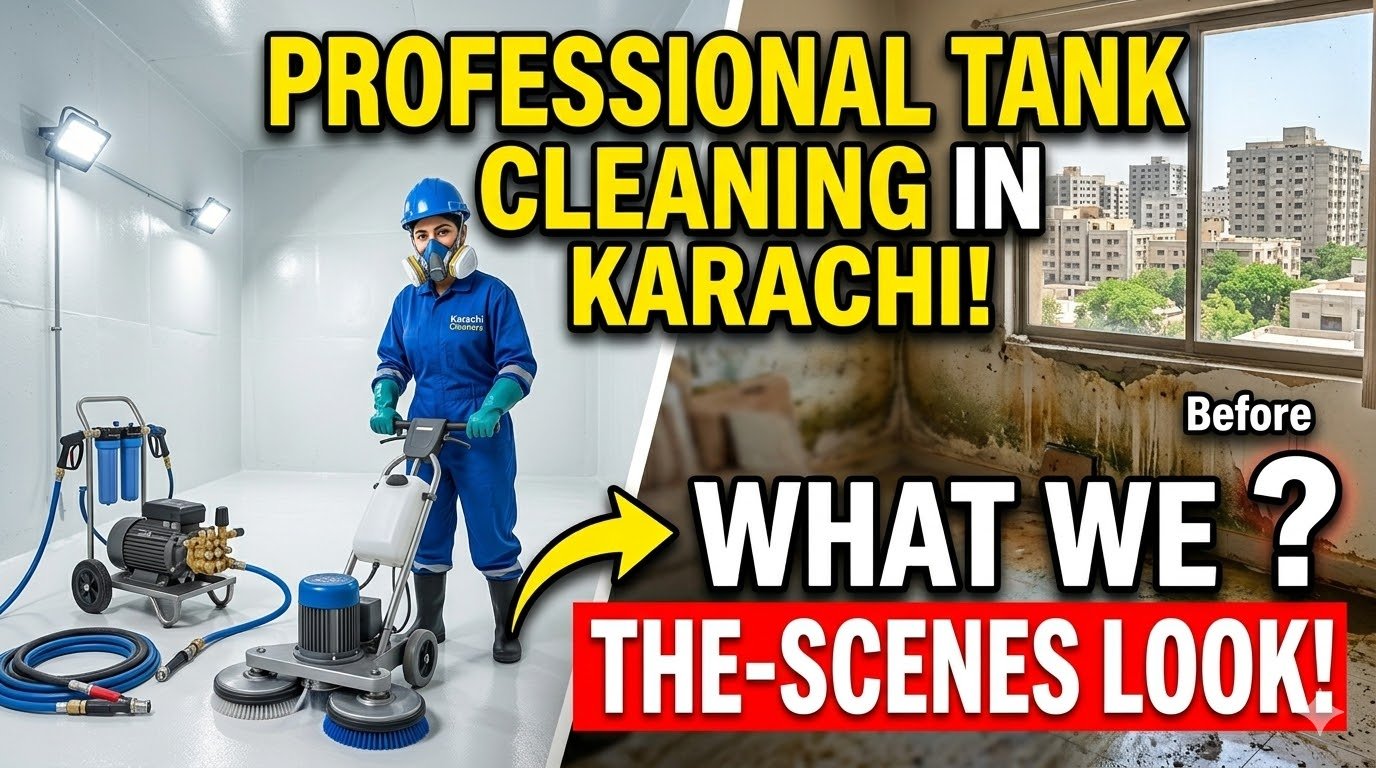
    If you have only ever seen a tank cleaned with a brush and a bucket, a professional visit looks quite different. There is more equipment, more time spent before anyone touches the tank, and paperwork at the end. This article walks through professional tank cleaning in Karachi exactly as our crews carry it out, with the time each stage takes, so you know what to expect and what to check.

    The visit at a glance

    StepWhat happensTypical time
    1. Survey and written quoteTank measured, sludge depth and access checked, price confirmed in writingAbout 20 minutes
    2. Controlled drainageTank drained to a safe level, water directed to a drain, pump protected20 to 40 minutes
    3. Ventilation and gas testAir blown in, atmosphere tested, harness and attendant in place15 to 30 minutes
    4. Jet washingWalls, floor and ceiling cut clean at 3,000+ PSI45 minutes to 2 hours
    5. Vacuum extractionSludge and debris vacuumed into a container and removed30 to 90 minutes
    6. DisinfectionDisinfectant applied to every internal surface and left for the contact time15 minutes plus contact time
    7. Rinse and inspectionRinsed until clear; walls, joints, lid and cover checked20 to 40 minutes
    8. Report and invoiceDated report with photographs, next-service date, tax invoiceSame day

    In total, a rooftop plastic or fibre tank takes two to four hours and an underground RCC tank four to eight. Shared building tanks are similar to large underground tanks, and industrial or multi-tank sites are quoted after a survey. The same sequence is set out on our cleaning procedure page.

    Before the crew arrives

    • Pick the day. The best time is just before your supply turn, when the tank is low, so little water is wasted.
    • Store what you need. Fill buckets and drinking-water containers for the hours the tank is out of use.
    • Switch off the motor and any automatic pump controller.
    • Clear access to the underground hatch and the roof.
    • Tell the neighbours if the tank is shared.

    For a standard home no site visit is needed beforehand. The price comes from the property type, tank location and size, and you can get it from the online calculator. Commercial and industrial sites get a free survey first.

    Step 1: Survey and written quote

    The crew leader measures the tank, checks how deep the sludge is, notes the position of the hatch and works out where the vacuum hose and drain line will run. He also looks at what the tank is made of, because that decides the pressure used later. You receive the price in writing before any work starts, and that figure is the final price.

    Step 2: Controlled drainage

    The remaining water is pumped down to a workable level and sent to a drain, not across the courtyard or into the street. The supply outlet is protected so dirty water does not enter the household pipes, and the motor is safeguarded against running dry. If you want to save usable water for washing floors or plants, say so before this step.

    Step 3: Ventilation and gas test

    This step applies to underground and sealed tanks, and it is never skipped. Fresh air is blown into the tank, the air inside is tested, and nobody goes near the opening until that is done. The person entering wears a harness attached to a tripod, and a second person stays at the hatch for the whole job.

    The reason is simple. Closed tanks can hold gases and too little oxygen, and people die in them every year. In June 2025, five men died in an underground water tank in Karachi, three of them would-be rescuers. The WHO’s technical note on tank cleaning gives the same two instructions we follow: blow fresh air into the tank, and keep someone outside. If a crew skips this step at your home, stop the job.

    Step 4: Jet washing

    Water at 3,000+ PSI is worked systematically across the walls, floor and ceiling. This is what removes biofilm, the thin, slippery layer of bacteria that a brush only smears. It also lifts algae, scale and packed silt in corners and around pipe entries.

    Pressure is matched to the material:

    Tank typeHow it is treated
    Underground RCC (concrete)Full pressure; extra passes on rough or pitted surfaces where film holds on
    Rooftop RCC or brickFull pressure; joints and plaster checked for loose material
    Plastic (polyethylene)Reduced pressure; non-abrasive pads for stubborn patches
    Fibreglass (Syntex, Bestank and similar)Reduced pressure to protect the inner gel coat
    Stainless steelModerate pressure; weld seams and fittings inspected

    Step 5: Vacuum extraction

    Everything the jet has loosened, along with the settled sludge, sand and rust, is vacuumed into a container and taken off the property. The floor corners get a second look, because that is where silt compacts. This is the step manual cleaning cannot copy. Without a vacuum, sludge is stirred into the water and much of it stays in the tank or goes down the outlet. We compare the two methods in tank wallah versus professional cleaning.

    Step 6: Disinfection

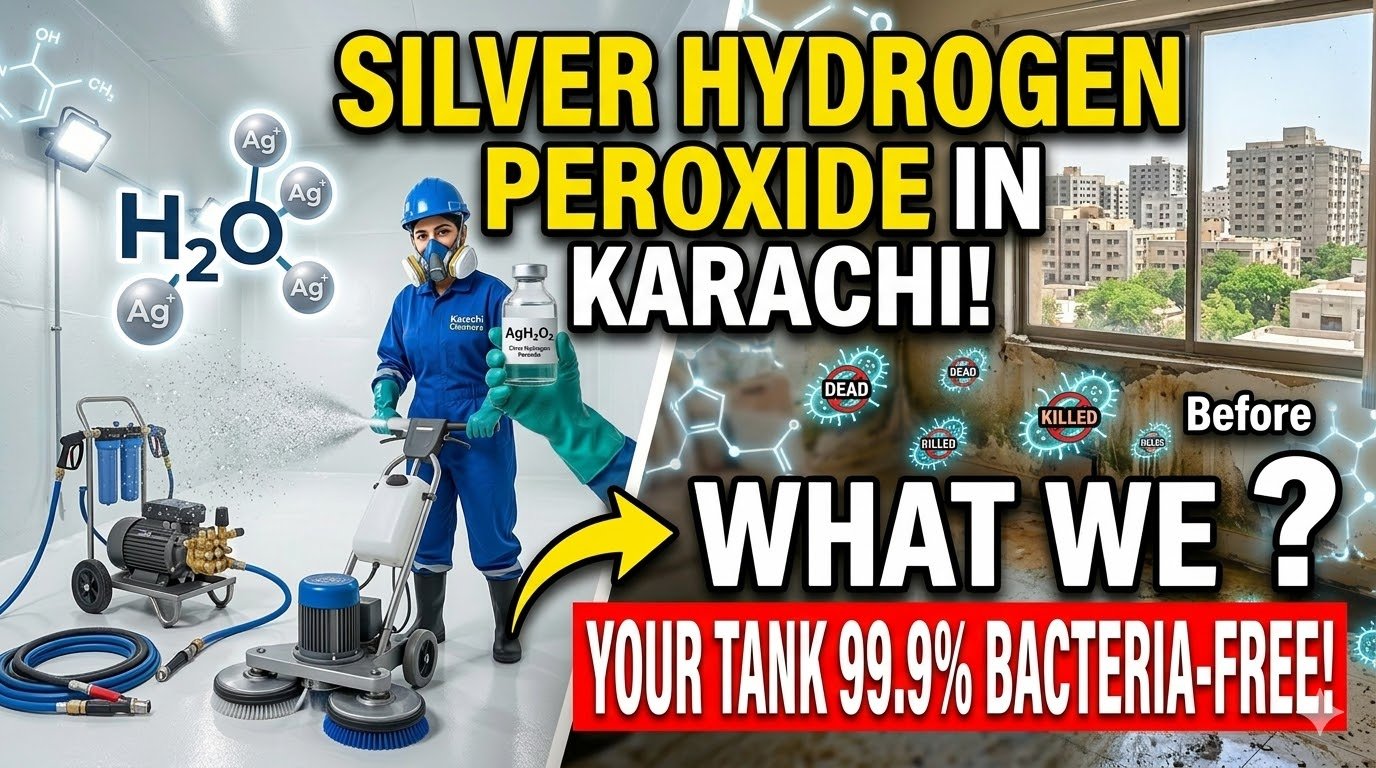
    With the surfaces physically clean, disinfectant is applied to every internal surface at a concentration matched to the tank’s volume, and left for its contact time. Our standard product is silver-stabilised hydrogen peroxide, which breaks down into water and oxygen and leaves no taste. For heavily contaminated tanks we use food-grade chlorine at a controlled concentration. We do not use industrial acids, raw household bleach or unlabelled products. How the disinfectant works, and its limits, are covered in silver hydrogen peroxide for tank disinfection.

    Step 7: Rinse and inspection

    The tank is rinsed until the water runs clear. Then the crew inspects the structure: walls and floor for cracks, joints and pipe entries for gaps, and the lid, hinge and inspection cover for damage. Faults are photographed. We do not carry out structural repairs, but you will know exactly what needs fixing and why.

    Step 8: Report and invoice

    On the same day you receive a dated service report with the photographs taken inside the tank, a recommended date for the next service, and a numbered SRB/FBR tax invoice. Keep the report. It is your record for the next cleaning, and for landlords, unions and businesses it is the document an inspector or auditor will ask for. Why the invoice matters is explained in SRB and FBR registration.

    What can make a job take longer

    • A full tank. Draining a tank that was filled yesterday adds time and wastes water. Schedule around the supply turn.
    • Deep, compacted sludge in a tank that has not been cleaned for years.
    • Difficult access: a hatch under a parked car, a roof reached by a narrow stair, a tank room used for storage.
    • Heavy scale from borehole water, which needs more passes.
    • Poor ventilation readings. If the air in an underground tank is not safe, the crew ventilates for longer. That delay is the system working as it should.
    • Several tanks on one property.

    None of these changes the price once it has been quoted in writing.

    After the cleaning

    • Refill and use the water as normal. There is no waiting period once the tank has been rinsed.
    • Run each tap for a minute to clear the pipes.
    • Carry out any lid or crack repairs the report recommends before the next rains.
    • Note the next-service date. For most homes that is four to six months away; see how often to clean a tank in Karachi.
    • Keep treating drinking water. A clean tank does not change what the supply delivers, as our KWSB water supply guide explains.

    How to tell a proper job from a quick rinse

    1. Air was blown into the underground tank and someone stayed at the hatch.
    2. You saw the sludge that came out.
    3. The walls near the waterline are no longer slippery to the touch.
    4. The floor is visible and clean in the after photographs, including the corners.
    5. The final rinse water ran clear.
    6. You were handed a dated report and an invoice.

    If you are comparing companies, the questions in what to ask before hiring a tank cleaning company will separate those who work this way from those who do not. For what crews usually find when they open a tank, see what we find in Karachi’s water tanks.

    Why professional tank cleaning in Karachi takes this much care

    The city’s water arrives intermittently, at low pressure, through a network that loses more than half of what enters it, and is then stored for days in the heat. Sediment and bacteria collect in tanks faster here than in cities with continuous supply. A method that leaves a film on the walls or an inch of sludge on the floor simply restarts the cycle. That is the reason for the equipment, the sequence and the time.

    Booking

    Both branches work 24 hours, including Sundays and public holidays: DHA, Clifton and South Karachi on 0333 0293174 and Gulshan, Jauhar and East Karachi on 0340 2717530.

    Frequently asked questions

    How long will we be without water?

    Two to four hours for a rooftop tank and four to eight for an underground RCC tank, plus the time your tank takes to refill.

    Do you need water or electricity from us?

    The crew will tell you what is needed when you book. Some water is required for jet washing and rinsing, which is one reason to schedule the job around your supply day.

    Is the tank safe to use straight after?

    Yes. The disinfectant is rinsed out before refilling.

    Can you clean the underground and rooftop tanks on the same visit?

    Yes, and it is the sensible way to do it. Cleaning only one leaves the other to recontaminate it.

    Will you repair cracks or replace the lid?

    We report and photograph defects so you can have them repaired. The cleaning visit does not include structural work.

    How many people come, and do I need to supervise?

    A crew, not one man, because nobody enters an underground tank without a second person at the hatch. You do not need to supervise, but be present at the start to agree the scope and at the end to see the tank and receive the report.

    What happens to the sludge?

    It is vacuumed into a container and taken off the property, not left in the drain outside your gate.

    Can the work be done at night?

    Yes. Both branches operate around the clock.

    Sources

    External references used in this article, checked in October 2026:

    About Khan Tank Cleaning

    This guide is published by Khan Tank Cleaning, a Karachi water tank cleaning company founded in 2005 by Mateen Khan. We work from two branches, DHA Phase 2 and Gulshan-e-Iqbal, and you can read more about the company or contact either branch at any hour. Call or WhatsApp 0333 0293174 (DHA) or 0340 2717530 (Gulshan).

  • We Cleaned 7,000+ Homes in Karachi: Here Is What We Always Find

    We Cleaned 7,000+ Homes in Karachi: Here Is What We Always Find

    After more than 7,000 houses, we can usually guess what a tank will look like before the lid comes off. The details change with the area and the age of the building, but the same six findings turn up in almost every tank that has gone a year or more without a proper cleaning.

    This article sets out those water tank cleaning Karachi results: what we see, why it happens here, what it means for the water at your tap, and how to check for it yourself. These are field observations from our own work, not a scientific survey, and we have kept numbers out of it where we have not measured them.

    The six findings at a glance

    What we findWhereWhat it meansThe fix
    Dark sludge on the floorAlmost every tank, deepest undergroundA store of sediment and bacteria that is stirred up at every fillVacuum extraction, then a schedule
    Slime and algae on wallsRooftop tanks with poor lids; all tanks near the waterlineBiofilm that protects bacteria from chlorineJet washing; a lid that blocks light
    Rust and corroded fittingsOld steel lids, pipe entries, float valvesDiscoloured water, metallic taste, gaps for dirtReplace fittings; seal entries
    Insects, larvae and animalsTanks with cracked or missing coversDirect contamination and mosquito breedingSound lid, mesh on vents and overflow
    Signs of an earlier bad cleaningTanks that were “cleaned” recentlyAcid-etched concrete, sludge pushed into corners, no disinfectionA complete clean, done in the right order
    Years of neglectHomes that have never had a cleaningAll of the above at onceA first deep clean, then every four to six months

    1. A dark sludge layer on the floor

    This is the most consistent finding. Every fill brings fine silt, rust and organic matter with it, and in still water it sinks. Underground tanks collect the most, because they receive water straight from the line, including the dirty first flow after every outage and repair.

    The sludge is not just unsightly. It shelters bacteria, uses up any chlorine left in the water, and is disturbed each time the tank refills or runs low. When the level drops close to the outlet, it is drawn into the house. Where it comes from is explained in our guide to KWSB water supply, and the effect of outages in load shedding and water contamination.

    2. Slime and algae on the walls

    Run a hand along the inside of a neglected tank and it feels slippery. That film is biofilm, a layer of bacteria in a protective coating. It forms on any wet surface and thickens fastest in warm water. Where light gets in, through a cracked lid or a thin translucent plastic wall, green or black algae grow on top of it.

    Rooftop tanks show this most clearly, because of the heat, as we explain in heat and bacteria in water tanks. In underground tanks the film is there too, usually as a brown coating at and below the waterline.

    3. Rust and corroded fittings

    Steel lids, ladder rungs, old pipe stubs and float valve arms rust steadily in the damp air above the water. The flakes fall in. Near the coast, in Clifton, Gizri and Seaview, salt-laden air corrodes lids, hinges and inspection covers noticeably faster. Corroded pipe entries also leave gaps where surface water and insects get in. A tank can be clean on the day and contaminated again within a month if these are not fixed, which is why every report we write lists them.

    4. Insects, larvae and the occasional animal

    Mosquito larvae are common in tanks with loose or missing covers. So are cockroaches, ants and lizards, and now and then a bird or a rat that fell in and could not get out. Householders are usually shocked, but the cause is always the same: an opening that was not sealed.

    Larvae matter beyond the tank. The WHO’s dengue guidance tells households to cover, empty and clean domestic water storage containers because that is where the mosquito breeds.

    5. Signs of an earlier bad cleaning

    Many customers tell us the tank was cleaned a few months ago. Inside, we often find the evidence of how: concrete roughened by acid, which makes it hold dirt and film more easily; a clean patch within arm’s reach of the hatch and untouched walls beyond it; sludge swept into the far corners; and no sign that disinfection was done at all.

    A manual cleaning without a vacuum cannot remove sludge, only move it. We describe the difference in tank wallah versus professional cleaning.

    6. Tanks that have never been cleaned

    Some families have lived in a house for ten or fifteen years without anyone opening the underground tank. Nobody was careless. The tank is out of sight, the water looked clear, and no one told them it needed doing. These jobs take longest: the sludge is deep and compacted, the film is thick, and the lid has often rusted through.

    If this describes your home, do not be embarrassed about it, and do not send a labourer down to have a look. Tanks that have been closed for years are the most dangerous to enter. In June 2025, five men died in an underground water tank in Ibrahim Hyderi after the first two were overcome by gas.

    Does it differ by area?

    The six findings appear everywhere. What changes is the emphasis.

    • Apartment blocks in Gulshan-e-Iqbal and Gulistan-e-Jauhar: large shared tanks with heavy sludge and no clear record of cleaning. See water tank problems in Gulshan and Jauhar.
    • Bungalows in DHA and Clifton: big underground cisterns, corroded lids near the sea, and mixed tanker and piped water. See water quality in DHA.
    • Older houses across PECHS, Nazimabad and North Nazimabad: ageing RCC with cracks and rough surfaces.
    • Homes on borehole water in any area: thick mineral scale on walls and fittings.
    • Tanker-fed tanks anywhere: more sand, and more variation from one visit to the next.

    Water tank cleaning Karachi results: why tanks end up this way

    The city receives a little over half the water it needs, delivered for a few hours at a time. A World Bank document describes supply ranging from two hours every two days to four hours a day at very low pressure, through a network that loses more than half its water. Intermittent, low-pressure supply through leaking pipes means sediment in every fill; storage for days means time for it to settle and for bacteria to grow; heat speeds everything up.

    Check your own tank in five minutes

    1. Lift the rooftop lid and look at the wall just above the water. Is it green, brown or slimy?
    2. Shine a torch at the floor. Can you see it clearly, or is there a dark layer?
    3. Look at the lid, hinges and pipe entries for rust and gaps.
    4. Check for larvae: small wriggling shapes near the surface.
    5. Open the underground hatch, stand back, and look from above only. Do not climb in.

    If you see any of the six findings, the tank is due. Other warning signs, including those that show up in the family’s health, are listed in ten signs your water may be making you sick.

    What we do about each finding

    Our eight-step procedure deals with them in order: jet washing at 3,000+ PSI for the film and algae, vacuum extraction for the sludge, disinfection and rinse for what remains, and a photographed inspection for the rust, cracks and lids. A walk-through of a visit is in what happens during a professional tank cleaning.

    The report you receive includes photographs taken inside your tank before and after, so you can see your own results and not just take our word for it. To book, contact the Gulshan and Jauhar branch or the DHA and Clifton branch, or get a price online. The organisations we clean for, alongside households, are on our clients page.

    What your after photographs should show

    The photographs in the report are your evidence. Look at them properly before you file them away.

    • The floor: bare and even in colour, with no dark patches, especially in the corners and around the outlet.
    • The walls: the same colour from top to bottom. A tide mark at the old waterline means the film was not fully removed.
    • The ceiling and the underside of the lid: often forgotten, and often where algae and rust sit.
    • Pipe entries and the float valve: clean, with any gaps or corrosion pointed out.
    • Cracks and exposed steel: photographed close up, so a mason can see what needs doing.

    If a provider cannot show you the inside of your own tank before and after, you have no way to know which of the six findings is still there.

    Frequently asked questions

    How much sludge is normal?

    Some silt is unavoidable in Karachi, and a thin, even dusting after a few months is nothing to worry about. A layer you can draw a finger through means the interval is too long or the incoming water is unusually dirty.

    My water looks clear. Could the tank still be dirty?

    Yes. Sludge sits on the floor and film on the walls while the water above stays clear. It only shows at the tap when the level runs low or the tank is disturbed.

    Will I get photographs of my tank?

    Yes. Every job ends with a dated report that includes photographs from inside the tank.

    How often should I clean after the first deep clean?

    Every four to six months for most houses, as set out in how often to clean a water tank in Karachi.

    Do newer buildings have cleaner tanks?

    Newer concrete and plumbing help, but the sludge comes from the supply, not the building. A five-year-old tank that has never been cleaned looks much like a twenty-year-old one inside.

    Is an underground tank always dirtier than a rooftop one?

    It usually holds more sludge, because it receives water first. Rooftop tanks tend to have more algae and film because of heat and light.

    Sources

    External references used in this article, checked in October 2026:

    About Khan Tank Cleaning

    This guide is published by Khan Tank Cleaning, a Karachi water tank cleaning company founded in 2005 by Mateen Khan. We work from two branches, DHA Phase 2 and Gulshan-e-Iqbal, and you can read more about the company or contact either branch at any hour. Call or WhatsApp 0333 0293174 (DHA) or 0340 2717530 (Gulshan).

  • Silver Hydrogen Peroxide for Tank Disinfection: How It Works and Whether It Is Safe

    Silver Hydrogen Peroxide for Tank Disinfection: How It Works and Whether It Is Safe

    Silver hydrogen peroxide is the disinfectant we use on most of the water tanks we clean. Customers ask what it is, whether it is safe for a drinking water tank, and why we do not simply use chlorine. This article answers those questions as plainly as we can, including the limits of the product.

    One point before anything else. No disinfectant, this one included, makes a dirty tank safe. Silver hydrogen peroxide tank disinfection is the second half of a job whose first half is physically removing sludge and biofilm.

    In brief

    • Silver hydrogen peroxide is hydrogen peroxide stabilised with a trace of silver.
    • It disinfects by oxidation and breaks down into water and oxygen.
    • It is applied to the surfaces of an emptied, cleaned tank and then rinsed off.
    • It leaves no taste or smell, and no lasting residual in the water.
    • It is an alternative to chlorine for surface disinfection, not a replacement for cleaning.

    What is silver hydrogen peroxide?

    It is a solution of hydrogen peroxide (H2O2) with a very small amount of silver added. You will also see it written as silver-stabilised hydrogen peroxide, silver peroxide, or H2O2 with silver. The two components do different things:

    • Hydrogen peroxide is the main disinfectant. It is a strong oxidiser, the same chemical used in dilute form as an antiseptic, and after it has reacted it breaks down into water and oxygen.
    • Silver is present at trace levels. It stabilises the peroxide so that it does not decompose too quickly, and silver ions have their own antimicrobial effect, which has been known for well over a century.

    Commercial products are supplied as concentrates and diluted for use according to the size of the tank and the job.

    How it disinfects

    Hydrogen peroxide works by oxidation. It damages the cell walls, proteins and genetic material of bacteria, viruses and fungi on contact. Silver ions interfere with the enzymes microbes need to function. Used together, the peroxide does the fast work and the silver slows the peroxide’s breakdown, giving it longer to act on the surface.

    It is applied to the emptied, cleaned tank: walls, floor, ceiling and fittings are wetted with the diluted solution, left for the contact time, and then rinsed. It is a surface disinfection step, carried out between cleaning and refilling.

    What the regulators say

    • Hydrogen peroxide is an approved biocidal active substance in the European Union for several uses, including product-type 5, which is drinking water disinfection (Commission Implementing Regulation (EU) 2015/1730).
    • Silver: the WHO Guidelines for Drinking-water Quality set no formal guideline value for silver and state that concentrations of up to 0.1 mg/L can be tolerated without risk to health. The traces left on a rinsed tank surface are far below that.
    • Silver on its own: the WHO reviewed silver as a drinking-water disinfectant in 2018 alongside bromine and iodine. Silver alone acts slowly, which is one reason it is used here as a partner to peroxide and not by itself.
    • Chlorine remains, in the WHO’s words, the disinfectant of choice for public drinking-water supplies, and it is what the Sindh health department recommends to households.

    We mention the last point because some companies present silver hydrogen peroxide as a replacement for chlorine in every situation. It is not. They are different tools.

    Silver hydrogen peroxide vs chlorine

    Silver hydrogen peroxideChlorine (hypochlorite)
    Breakdown productsWater and oxygenChloride; can form by-products with organic matter
    Taste and smell after rinsingNoneCan linger if not rinsed well
    Effect on tank materialsGentle on concrete, plastic and fibreglass at use dilutionCan corrode metal fittings at high doses
    Lasting protection in stored waterNone once it has broken downLeaves a residual that keeps working for a time
    Track recordWidely used for surface and system disinfectionOver a century as the standard for drinking water
    CostHigherLow
    Affected by leftover dirtYesYes, strongly

    Our practice follows from that table. For routine cleaning we use silver hydrogen peroxide, because it leaves no taste or smell and is easy on the tank. For heavily contaminated tanks, for example after sewage seepage or flooding, we use food-grade chlorine at a controlled concentration followed by a full rinse. Both are listed on our cleaning procedure page. What we do not use is industrial acid, raw household bleach or any unlabelled product.

    Is it safe for my family?

    Used correctly, yes. Three things make it so:

    1. Dilution. The solution applied to the tank is a fraction of the concentrate’s strength.
    2. Breakdown. Hydrogen peroxide decomposes to water and oxygen. Nothing persistent is left behind.
    3. Rinsing. After the contact time the tank is rinsed until the water runs clear, before it is refilled.

    After refilling, the water can be used as normal by everyone in the house, including children and pregnant women. The concentrate itself is a different matter: it is corrosive, needs gloves and eye protection, and should never be stored or handled by householders. That is the crew’s job.

    What it does not do

    • It does not replace cleaning. Sludge and thick biofilm shield bacteria and use up any oxidiser. They have to be removed mechanically first, which is why jet washing and vacuum extraction come before disinfection.
    • It does not keep working for months. Once the peroxide has broken down there is no lasting residual in the water. Claims of long-term protection are overstated.
    • It does not make incoming water safe. The next fill brings whatever the supply or tanker delivers. Our guide to KWSB water supply explains why that is often contaminated.
    • It does not justify a “99.9% bacteria-free” promise. Kill rates of that kind come from laboratory tests on clean surfaces. A real tank is judged by whether the sludge and biofilm are gone and the disinfection step was done properly.

    So you still need to treat drinking water and clean on a schedule. See water filter versus tank cleaning and how often to clean a tank in Karachi.

    Four common myths

    MythReality
    “It keeps the tank germ-free for months”It works on contact and then breaks down. Nothing stays in the water to protect the next fill.
    “It dissolves sludge and biofilm”It weakens surface film but cannot get through thick deposits. Those are removed with a jet and a vacuum first.
    “It is chemical-free”It is a chemical, and the concentrate is hazardous to handle. What is true is that it leaves no harmful residue after rinsing.
    “Chlorine is outdated”Chlorine remains the world’s standard drinking-water disinfectant and is the right choice in some situations.

    Where silver hydrogen peroxide tank disinfection sits in the cleaning sequence

    1. Survey and written quote
    2. Controlled drainage
    3. Ventilation and gas check for underground tanks
    4. Jet washing at 3,000+ PSI to detach biofilm
    5. Vacuum extraction of sludge
    6. Disinfection: silver hydrogen peroxide applied to every internal surface, at a concentration matched to the tank volume, and left for the contact time
    7. Rinse until clear, and inspection of walls, joints and lid
    8. Dated report with photographs, and invoice

    Each step is described in what happens during a professional tank cleaning.

    Why this matters in Karachi

    Stored water here is warm for most of the year and often arrives contaminated, conditions in which bacteria regrow quickly on any film left on the walls. The organisms of most concern are described in waterborne disease in Karachi, and the effect of temperature in heat and bacteria in water tanks. Naegleria fowleri, which has caused deaths in Karachi most years since 2012, is controlled by keeping tanks clean and water chlorinated, according to Sindh health department advice. If Naegleria is your main concern, ask us about chlorine disinfection and about keeping a chlorine residual in the tank afterwards.

    Questions to ask any provider about their disinfectant

    • What is the product called, and can I see the label?
    • Is it intended for drinking water tanks?
    • How do you decide the dose for my tank?
    • How long do you leave it before rinsing?
    • How do you rinse, and how do I know it is rinsed out?

    More questions of this kind are in what to ask before hiring a tank cleaning company.

    Booking a cleaning

    We clean and disinfect tanks across Karachi from two branches: DHA, Clifton and South Karachi and Gulshan, Jauhar and East Karachi. For a standard home, the price calculator gives a fixed quote.

    Frequently asked questions

    Is silver hydrogen peroxide better than chlorine?

    It is better on taste, smell and gentleness to the tank. Chlorine is cheaper, has a longer track record and leaves a protective residual. For routine surface disinfection of a cleaned tank either works when dosed and rinsed correctly.

    Will my water taste different after the cleaning?

    It should not. Hydrogen peroxide leaves no taste or smell once rinsed. Any taste from chlorine, where we have used it, fades within a fill or two.

    How soon can we use the water?

    As soon as the tank has been rinsed and refilled.

    Can I buy it and disinfect the tank myself?

    We do not recommend it. The concentrate is hazardous to handle, dosing depends on tank volume, and disinfecting a tank that has not been properly cleaned is largely wasted effort.

    Does it remove sludge or scale?

    No. Those are removed mechanically. The disinfectant deals with what remains on the cleaned surface.

    Is silver peroxide the same thing as silver hydrogen peroxide?

    In the cleaning trade, yes. “Silver peroxide”, “H2O2 silver” and “silver and hydrogen peroxide” are all used for silver-stabilised hydrogen peroxide solutions.

    Does the silver build up in the tank over time?

    No. The amount is tiny and the surfaces are rinsed after each treatment.

    Is it used anywhere apart from water tanks?

    Yes. Silver-stabilised hydrogen peroxide is used for disinfecting surfaces and water systems in several industries, which is why it is supplied in different strengths.

    Sources

    Figures in this article were checked in October 2026 against the following:

    About Khan Tank Cleaning

    Khan Tank Cleaning is a Karachi company that does one thing: clean and disinfect water storage tanks. It was started in 2005 by Mateen Khan and now runs branches in DHA Phase 2 and Gulshan-e-Iqbal. Read our background or reach the nearest branch on 0333 0293174 (DHA) or 0340 2717530 (Gulshan), day or night.

  • Tank Wallah vs Professional Cleaning in Karachi: What Really Gets Left Behind

    Tank Wallah vs Professional Cleaning in Karachi: What Really Gets Left Behind

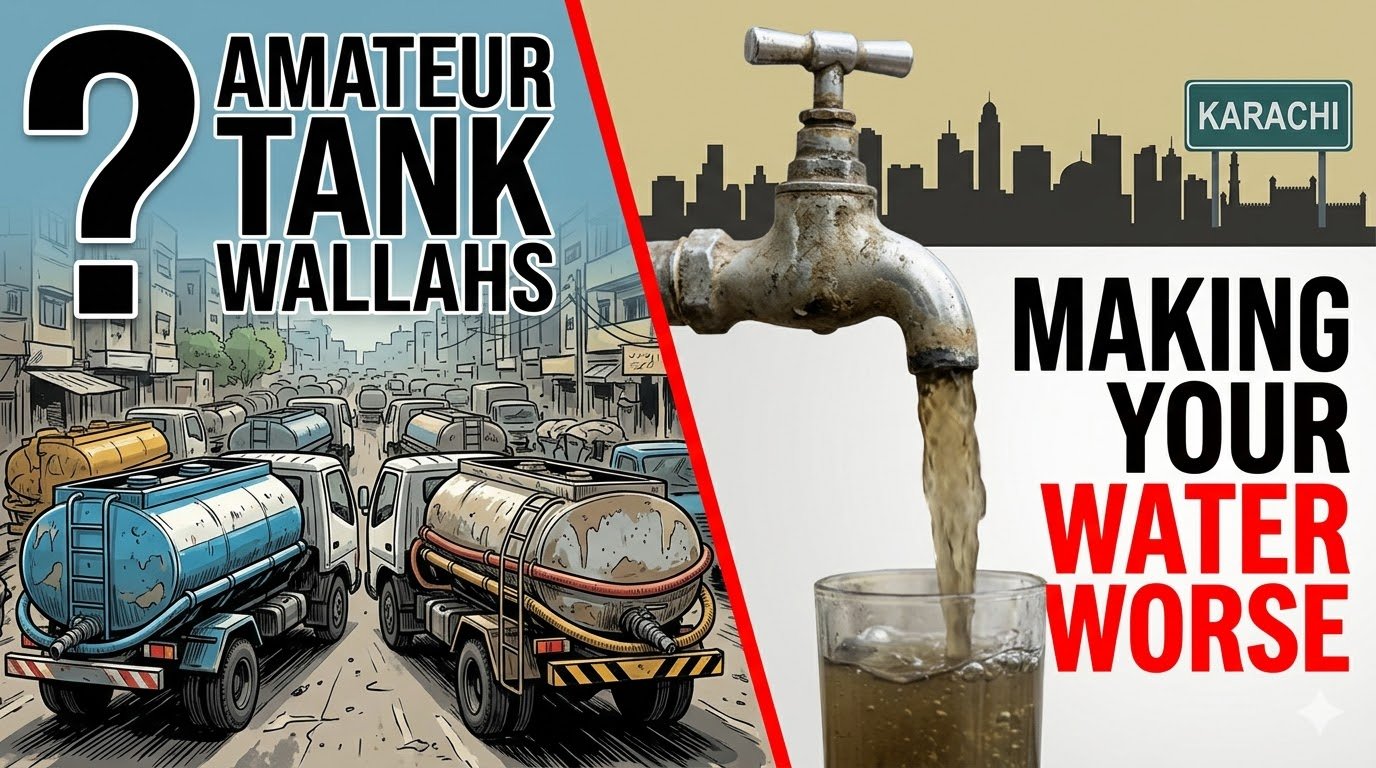
    Most water tanks in Karachi that are cleaned at all are cleaned by a tank wallah: a man who goes door to door, or whom the chowkidar knows, with a rope, a bucket and a brush. He is cheap, he comes the same day, and when he leaves the tank looks better than it did.

    This article compares tank wallah vs professional in Karachi as fairly as we can. The men who do this work are not the problem. They are doing a hard and dangerous job without the tools it needs. The problem is what the method cannot do, and what it risks.

    In brief

    • A brush and bucket remove loose dirt. They leave most of the sludge and the bacterial film on the walls.
    • Entering an underground tank without ventilation and a person outside has killed people in Karachi, including five in one incident in 2025.
    • Cleaning and disinfection are separate steps. Bleach poured into a dirty tank does little.
    • Manual rinsing has a place for small rooftop tanks between proper cleanings, and nowhere else.
    • Not every company that calls itself professional is. Ask what equipment and safety steps they use.

    Tank wallah vs professional in Karachi: side by side

    Tank wallahProfessional service
    ToolsRope, bucket, brush, clothPressure washer, wet vacuum, pump, lighting
    SludgeStirred and bailed; much is left or flushed into the pipesVacuumed out of the tank
    Biofilm on wallsScrubbed where the arm can reachCut off all surfaces with a water jet at 3,000+ PSI
    DisinfectionNone, or bleach or acid poured by eyeMeasured dose of a product suited to drinking water tanks, then a rinse
    Underground entryNo ventilation, no gas check, usually aloneForced ventilation, gas check, harness, attendant at the hatch
    ProofNoneDated report with photographs
    InvoiceCashNumbered tax invoice
    Typical timeUnder an hourTwo to four hours for a rooftop tank, four to eight for underground RCC

    What a brush and bucket leave behind

    Biofilm

    The slippery layer on a tank wall is a living film of bacteria held in a protective slime. A brush removes the loose top and smears the rest. Corners, the ceiling, the back wall of an underground tank and the area around pipe entries are rarely reached at all. Within days the film has regrown from what remains.

    Sludge

    With no vacuum, the only way to remove sludge is to stir it into the last few inches of water and bail it out. A good part stays on the floor, and some is pushed into the outlet pipe, from where it reaches your taps and filters. People often notice dirtier water for a few days after a manual cleaning, and this is why.

    Disinfection

    Cleaning and disinfecting are separate steps, in that order. The WHO’s technical note on cleaning and disinfecting storage tanks sets out the sequence: empty and scrub, flush, then disinfect with a measured chlorine dose and leave it for the contact time. A splash of bleach in a tank that still holds sludge is used up by the dirt before it kills anything. Acid, which some cleaners use because it makes concrete look bright, is not a disinfectant and attacks the tank surface.

    The safety problem nobody mentions

    An underground tank is a confined space. Gases collect in it and oxygen can be low, and a person who climbs down can lose consciousness within seconds. The people who go in after him usually suffer the same fate.

    These are not freak events. They are what happens when a tank is entered without ventilation, without testing the air and without a trained person outside. Sindh’s factory law recognises the danger: section 48 of the Sindh Factories Act, 2015 bars entry into any tank or confined space where dangerous fumes are likely unless it has been made safe or the person has breathing apparatus and a rope held from outside. No such rule protects a labourer in a private home. As the householder, you are the one who let him in.

    If you take one thing from this article, let it be this: never allow anyone to enter your underground tank alone, without air being blown in first, and without someone standing at the opening.

    Why it matters more in Karachi

    A quick rinse would matter less in a city with clean, continuous supply. Karachi’s water arrives intermittently, carries sediment and bacteria from a leaking network, and is stored for days in the heat. The background is in our guides to KWSB water supply and heat and bacteria in tanks. In those conditions the layer left behind after a manual cleaning becomes the starting culture for the next few months.

    The real cost comparison

    A tank wallah charges a fraction of a professional fee, and we will not pretend otherwise. The fair comparison is between what each fee buys.

    Cost itemTank wallahProfessional service
    Fee per visitLowHigher; fixed by tank type and size
    How long the result lastsWeeks, because biofilm and sludge remainMonths, to the next scheduled cleaning
    Effect on filtersCartridges often clog after the visitCartridges last longer
    Risk carried by youInjury or death on your property; no record of workTrained crew with safety equipment; written report
    Damage riskAcid on concrete; cracked fibreglass from rough handlingPressure matched to tank material

    We have deliberately left out figures for hospital bills. They vary too widely to quote honestly. The link between stored water and illness is covered, with sources, in waterborne disease in Karachi.

    Why the trade stays informal

    It is worth understanding why the tank wallah exists. There is no licence, training requirement or inspection for tank cleaning in Karachi. Entry costs nothing: a rope and a brush. Customers mostly judge by price and by whether the tank looks clean from the hatch, and both of those favour the quick rinse. The men doing the work earn little, carry all the physical risk and have no employer responsible for their safety.

    Nothing in that is the worker’s fault, and nothing in it will change through regulation soon. It changes one household at a time, when customers start asking what was removed, how the tank was entered and what was used to disinfect it.

    When is a tank wallah good enough?

    There is a limited case. A small rooftop plastic tank that was professionally cleaned a few months ago, has a sound lid and shows only light dust can be rinsed out by a careful person standing outside it, with no need to climb in. That is maintenance between proper cleanings. It is not a substitute for them, and it never applies to an underground tank.

    If you still plan to use a manual cleaner

    1. Do not let anyone enter the underground tank. Limit the job to what can be done from outside.
    2. Open the tank and air it for as long as possible before any work, and keep the lid off.
    3. Have a second adult present for the whole job.
    4. Forbid acid. Check what is in the bottle.
    5. Make sure sludge is taken out of the tank, not flushed through the outlet. Close the outlet valve during the work.
    6. Rinse thoroughly and run the first refill to waste.
    7. Book a proper cleaning within the season.

    What professional cleaning involves

    Our eight-step procedure runs in this order: survey and written quote, controlled drainage, ventilation and gas check, jet washing, vacuum extraction, disinfection, rinse and inspection, report and invoice. A full description of a visit is in what happens during a professional tank cleaning, and the disinfectant is explained in our silver hydrogen peroxide article.

    Not every company that calls itself professional works this way. Use the checklist in what to ask before hiring a tank cleaning company to tell them apart, and see what we typically find in Karachi tanks for the condition most tanks are in after years of manual cleaning.

    To book, contact the branch for Gulshan, Jauhar and East Karachi or DHA, Clifton and South Karachi, or get a price online.

    Frequently asked questions

    My tank wallah has cleaned our tank for years and nobody has been ill. Why change?

    Illness from stored water is often mild, delayed and blamed on food, so the link is easy to miss. The stronger argument is safety: an unventilated underground tank is a risk every single time someone enters it.

    Can I clean my own rooftop tank?

    A small plastic tank, from the outside, yes, as maintenance between professional cleanings. Drain it, wipe and rinse the inside without climbing in, and check the lid and mesh.

    Is bleach safe to use in a water tank?

    Chlorine is the standard disinfectant for drinking water worldwide, but the dose and contact time matter and the tank must be cleaned first and rinsed afterwards. Pouring household bleach by eye into a dirty tank achieves little.

    How often should a tank be cleaned properly?

    Every four to six months for most houses and every three months for shared tanks. See how often to clean a water tank in Karachi.

    Can I pay my usual cleaner more to do it properly?

    More money does not supply a pressure washer, a vacuum, a gas detector or training. If he has those, he is no longer a tank wallah. If he does not, the result will be the same.

    What is the biggest danger with informal tank cleaning?

    A person entering an unventilated underground tank. Everything else is a matter of water quality; that is a matter of life and death.

    Sources

    External references used in this article, checked in October 2026:

    About Khan Tank Cleaning

    Written by the team at Khan Tank Cleaning, which has worked on Karachi’s water tanks since 2005 under founder Mateen Khan. Some of the organisations we clean for are listed on our clients page. To talk to a branch, use the contact page or call 0333 0293174 (DHA Phase 2) or 0340 2717530 (Gulshan-e-Iqbal).

  • What to Ask Before You Hire a Tank Cleaning Company in Karachi (Red Flags Included)

    What to Ask Before You Hire a Tank Cleaning Company in Karachi (Red Flags Included)

    Anyone with a brush and a rope can call himself a tank cleaner in Karachi, and many do. The difference between a proper job and a bad one is not visible from the lid, which is why it pays to ask a few direct questions before you hire a tank cleaning company in Karachi. A serious provider will answer all of them without hesitation.

    We are a tank cleaning company, so read this with that in mind. We have tried to make every point checkable by you, using public sources, and it applies to us as much as to anyone else.

    The nine questions, at a glance

    AskA good answerRed flag
    Is tank cleaning your main business?Yes, with a fixed office and landline or branch numbersA side service alongside painting, fumigation or general labour
    What equipment do you bring?Pressure washer, wet vacuum, pump, lighting, safety kitBrush, bucket and rope
    How do you enter an underground tank?Ventilation, gas check, harness and a person at the hatch“The boy just goes down”
    Which disinfectant do you use?Named product, safe for drinking water tanks, rinsed afterwards“Acid”, “chemical”, or cannot say
    How is the price worked out?By tank type and size, in writing, before work startsA vague figure that grows on the day
    Do I get a report?Dated report with photographsNothing in writing
    Are you registered for tax?SRB and FBR registration you can verify, numbered invoiceCash only, no invoice
    What certificates do you hold?Current certificates from a recognised body, shown on requestA logo on a flyer and nothing else
    Who else have you worked for?Named clients, reviews on a profile you can read“Everyone knows us”

    1. Is tank cleaning their main business?

    A company that cleans tanks every day has the equipment, a routine and trained staff. A general contractor who takes the occasional tank job usually has none of the three and hires day labour for the work. Ask how long they have been doing it, where their office is, and whether the people who arrive will be their own employees.

    2. What equipment will they bring?

    Three items do most of the work. A pressure washer strips the slippery bacterial film off walls and ceilings. A wet vacuum lifts the sludge out of the tank; without one, sludge is stirred up and most of it stays. A pump controls drainage so dirty water goes to a drain and not across your courtyard. If the answer is a brush and detergent, the result will be a tank that looks cleaner and is not. We explain why in tank wallah versus professional cleaning.

    3. How do they enter an underground tank safely?

    This question can save a life. Closed tanks collect gases and lose oxygen. In June 2025, five men died in an underground water tank in Ibrahim Hyderi: a worker and the owner’s son collapsed inside, and three more died trying to pull them out. In 2022, four workers died the same way at a factory in Landhi.

    The precautions are well established. The WHO’s technical note on cleaning storage tanks says to blow fresh air into the tank and to keep someone outside at all times. Sindh’s own factory law forbids entry into any tank or confined space where dangerous fumes are likely unless it has been made safe or the person has breathing apparatus and a rope held from outside (Sindh Factories Act, 2015, section 48). Ask what the crew does before anyone goes down. If the answer is nothing, do not let them work on your property.

    4. Which disinfectant do they use?

    They should be able to name it, tell you why it is suitable for a drinking water tank, and explain how it is rinsed out. The accepted options are chlorine-based products at a controlled dose and silver-stabilised hydrogen peroxide. Be wary of anyone who uses hydrochloric or other industrial acid to brighten concrete, pours in raw household bleach by eye, or carries unlabelled bottles. Our article on silver hydrogen peroxide for tank disinfection explains what we use and how it compares with chlorine.

    5. How is the price worked out?

    A fair price depends on whether the tank is underground or overhead, its capacity, the material, and for large sites the access. A provider who quotes without asking any of this is guessing, and the usual result is an argument at the end. Ask for the figure in writing and ask what it includes: drainage, sludge removal, disinfection and the report. Be suspicious of prices far below the market as well. Equipment, trained staff and safety gear cost money.

    For comparison, our online calculator gives a fixed price for standard homes from the property type, tank location and size, and the quote is the final price. Commercial and industrial sites get a free survey first.

    6. Do they leave a written report?

    A dated report with photographs taken inside the tank before and after is your only proof of what was done. It also tells you the condition of the walls, lid and fittings, and gives you a date to work from for the next cleaning. Landlords, unions, schools and restaurants need it for their own records. If nothing is offered in writing, there is nothing to hold the provider to.

    7. Are they registered for tax?

    Registration with the Sindh Revenue Board (SRB) and the Federal Board of Revenue (FBR) tells you the business exists on paper, can be traced, and can issue a proper invoice. You can check both yourself in a couple of minutes: the SRB runs an online taxpayer search, and FBR’s Active Taxpayer List can be checked online or by SMS to 9966. For companies and institutions this matters for another reason, because paying an unregistered service provider has tax consequences for the payer. We cover that in why SRB and FBR registration matters.

    8. What certificates do they hold, and can you verify them?

    ISO 9001 covers quality management and ISO 45001 covers occupational health and safety. Neither is a licence to clean tanks, but both mean an outside auditor has checked that the company follows a documented system. Certificates expire, and fake ones exist, so ask to see the certificate itself and check the issuing body. ISO explains how to verify an accredited certification, and the IAF CertSearch database lists certificates issued by accredited bodies. What the two standards mean in practice is covered in our certifications explained and why ISO-certified tank cleaning matters.

    9. Who else have they worked for?

    Look for named clients and for reviews on a platform the company does not control. Read the recent ones, look at how complaints were answered, and be cautious about a profile with only a handful of glowing lines. Our own clients are listed on the clients page, and this article explains how to read and check our reviews.

    Two more things worth asking

    How quickly can they come, and at what hours?

    Supply turns in Karachi come at odd hours, and a tank is easiest to clean when it is nearly empty. A provider who can work around your supply day, including evenings and Sundays, saves you wasted water.

    Do they know your kind of tank?

    Underground RCC, rooftop plastic, fibreglass and stainless steel tanks are cleaned differently. Pressure that suits concrete will damage fibreglass. Ask whether they have cleaned tanks like yours, and for large buildings ask how they handle multiple tanks without cutting off the whole block.

    When you hire a tank cleaning company in Karachi: the day itself

    1. Confirm the price and scope before work starts.
    2. Watch the safety setup for the underground tank. No ventilation and no one at the hatch means stop.
    3. Ask to see the sludge that came out, and look at the floor before disinfection.
    4. Check the walls near the waterline with a torch. They should not feel slippery.
    5. Make sure the tank is rinsed until the water runs clear.
    6. Collect the report and the invoice before the crew leaves.

    A step-by-step account of a visit is in what happens during a professional tank cleaning.

    How Khan Tank Cleaning answers these questions

    • Main business: tank cleaning only, since 2005, from offices in DHA Phase 2 and Gulshan-e-Iqbal.
    • Equipment: 3,000+ PSI jet washing and vacuum sludge extraction, as set out in our cleaning procedure.
    • Underground entry: forced ventilation and a gas check before entry, harness and tripod, and an attendant at the hatch.
    • Disinfectant: silver-stabilised hydrogen peroxide, with food-grade chlorine for heavily contaminated tanks. No industrial acids and no raw household bleach.
    • Price: written before work starts; the quote is the final price.
    • Report: dated service report with photographs and a recommended next-service date.
    • Tax: SRB and FBR registered, with a numbered tax invoice.
    • Certificates: ISO 9001 and ISO 45001. Ask either branch to show you the current certificates.

    Check any of it before you book. The thinking behind these standards is set out in how we built a trusted tank cleaning service. Our branches cover DHA, Clifton and South Karachi and Gulshan, Jauhar and East Karachi.

    Frequently asked questions

    How much should tank cleaning cost in Karachi?

    It varies with tank type and size, so no single figure is honest. Get a written quote based on your actual tank, and compare what is included, not only the number.

    Is the cheapest option ever the right one?

    For a rinse, perhaps. For removal of sludge and biofilm with safe entry and proper disinfection, a price that cannot cover equipment and trained staff usually means those things are missing.

    Do I need to be at home during the cleaning?

    Someone should be, at least at the start and the end, to agree the scope, see the tank before refilling and receive the report.

    How often will I need to hire someone?

    Every four to six months for most houses. The detail is in how often to clean a water tank in Karachi.

    Should I ask for references?

    For a house, public reviews and a look at a sample report are usually enough. For a building, school or business, ask for two clients of a similar kind and call them.

    What if the crew that arrives is not what was promised?

    Do not let work start. Call the office, and if the equipment or safety arrangements described on the phone are missing, send the crew away. You are under no obligation once the terms have changed.

    Sources

    External references used in this article, checked in October 2026:

    About Khan Tank Cleaning

    Khan Tank Cleaning has cleaned residential, commercial and industrial water tanks in Karachi since 2005. The company was founded by Mateen Khan, who still oversees quality control at both branches. More about us, or get in touch: 0333 0293174 for DHA and South Karachi, 0340 2717530 for Gulshan and East Karachi, both answered 24 hours.